
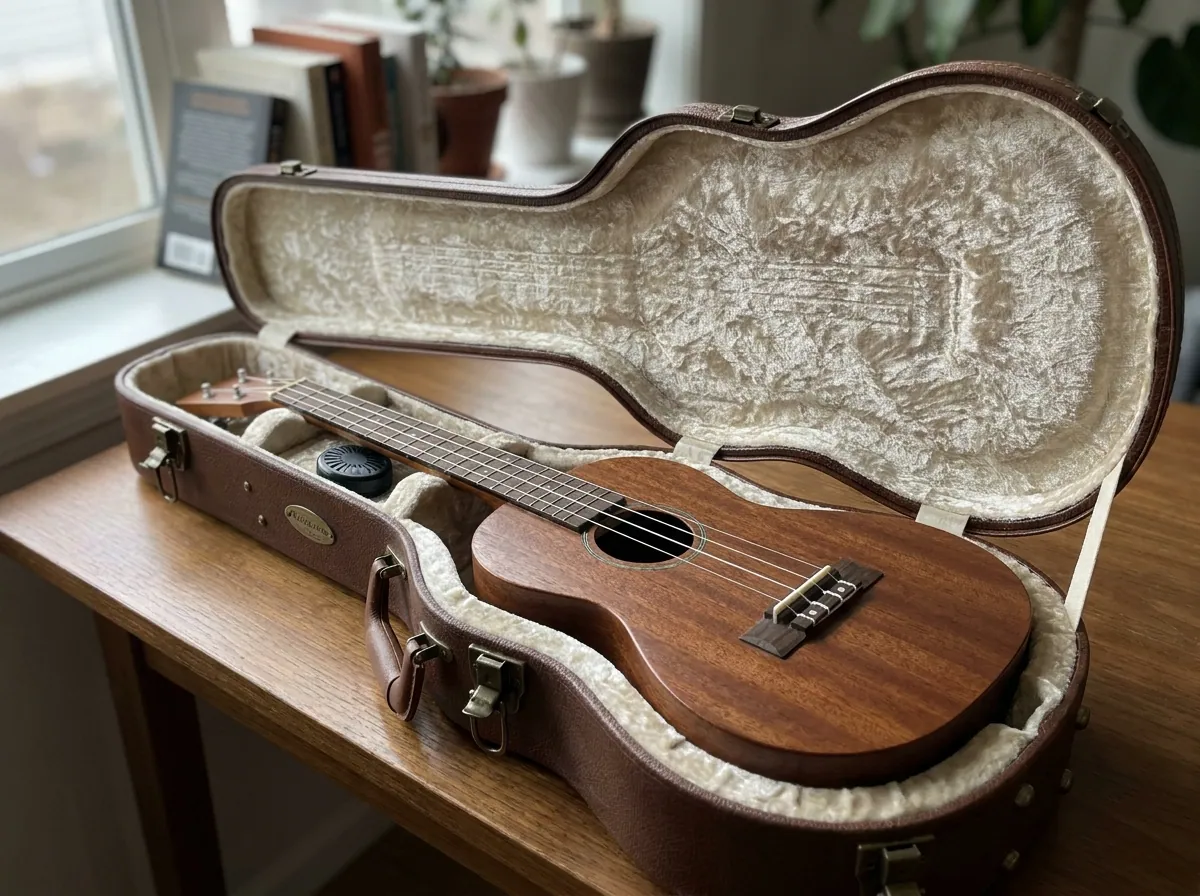
A ukulele is a wooden instrument, and like anything made of wood, it lasts longer and sounds better when you look after it. Ukulele care is simple and takes a few minutes here and there. This guide covers humidity and temperature, cleaning, string care, and safe storage, so your ukulele stays in great shape for years.
Why Caring for Your Ukulele Matters
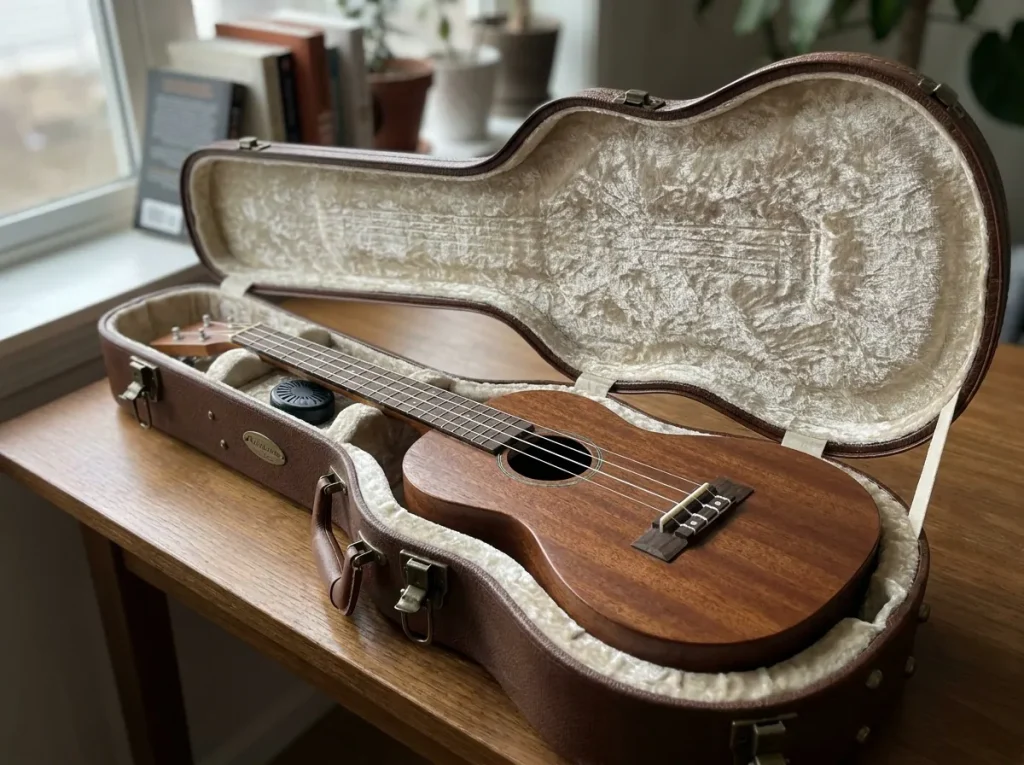
Proper care protects both the sound and the structure of your instrument. Wood reacts to its environment, expanding and contracting with moisture and temperature, and neglect can lead to cracks, warping, or a dull tone.
That goes double for solid-wood ukuleles, which are more sensitive than laminate ones. A little regular attention keeps your ukulele playing smoothly, holding its tuning, and looking good, and it protects the value of a nicer instrument.
Control Humidity: The Biggest Threat
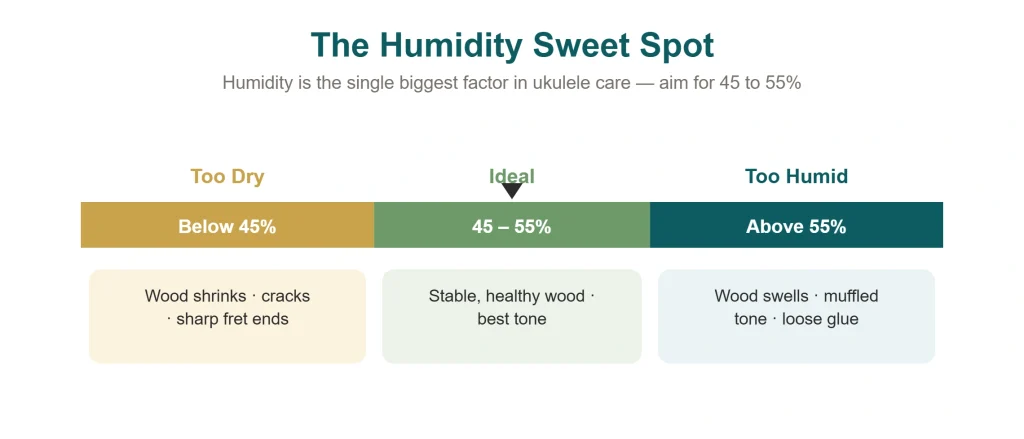
Humidity is the single most important factor in ukulele care. Wood absorbs and releases moisture from the air, and extremes in either direction can cause real damage.
When the air is too dry, the wood loses moisture and shrinks, which can cause cracks, sharp fret ends, and a thin sound. When the air is too humid, the wood swells, which can muffle the tone, cause the finish to cloud, and even loosen glue joints over time.
Most players keep their instrument in a relative humidity of roughly 45 to 55 percent, the same range that feels comfortable for people.
If you live in a very dry climate or use heating in winter, a small instrument humidifier placed in the case helps keep moisture stable. In very humid climates, silica gel packs or a dehumidifier in the room can help.
Solid-wood instruments need this attention most; laminate ukuleles are more forgiving, which is one reason they make such practical first instruments, as explained in our guide to the best ukulele woods.
Avoid Temperature Extremes
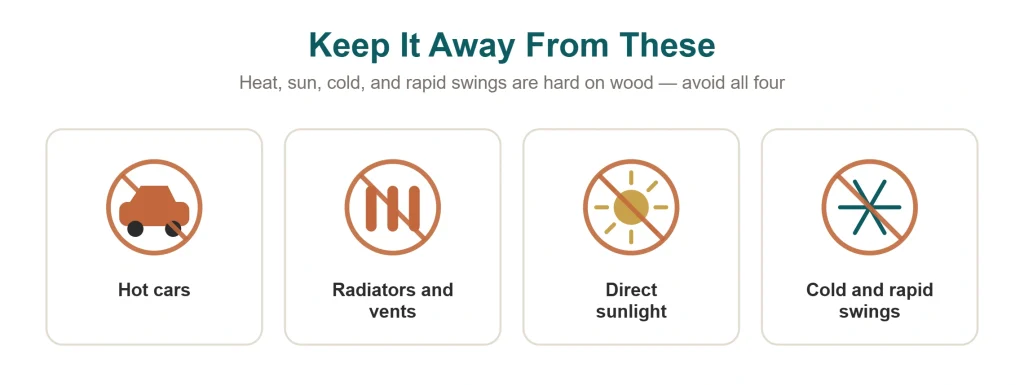
Sudden or extreme temperature changes are also hard on a ukulele. Heat can soften glue and finishes, cold can make wood brittle, and rapid swings between the two do the most harm. A few simple rules protect your instrument:
- Never leave your ukulele in a hot car, which can reach damaging temperatures in minutes.
- Keep it away from radiators, heating vents, fireplaces, and other direct heat sources.
- Avoid leaving it in direct sunlight, such as on a windowsill, where heat can build up.
- If your ukulele comes in from the cold, let it warm up to room temperature in its case before playing.
Keep Your Ukulele Clean
Cleaning is quick and makes a real difference to both looks and lifespan. The most useful habit is to wipe down your instrument after each playing session.
Use a soft, dry, lint-free cloth to wipe the strings, fretboard, and body, removing the oils and sweat your hands leave behind. This keeps the strings sounding fresh for longer and prevents grime building up on the body.
For the body, an occasional light wipe is all it needs. Avoid household cleaners, furniture polish, and harsh chemicals, which can damage the finish; if you want to use a product, choose one made for musical instruments. Start with clean hands; it is the easiest way to keep the instrument clean.
Care for the Strings
Ukulele strings are inexpensive but important. Wiping them after playing removes the oils that dull their tone and shorten their life. Over time, strings lose their brightness, become harder to keep in tune, or start to look worn or discolored, and that is the sign to replace them.
Many players change their strings every few months with regular play, or sooner if a string breaks or sounds dead. When you fit new strings, remember they will take a week or two to settle and hold their pitch, as covered in our guide on how to tune a ukulele.
How to Store Your Ukulele
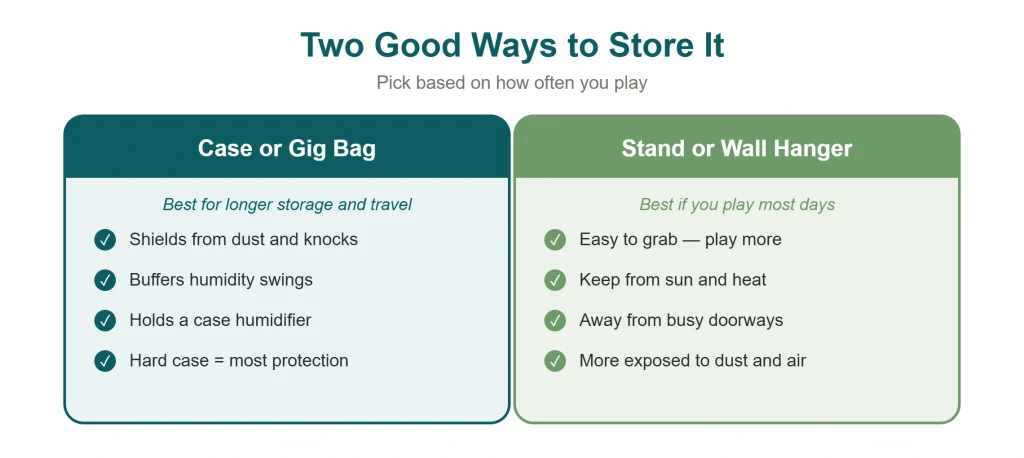
The way you store your ukulele between sessions matters, and you have a few good options depending on how often you play.
In a Case or Gig Bag
A case or padded gig bag is the safest option, and the best one for longer periods. It protects against dust, knocks, humidity swings, and accidental damage, and it is the best place to keep a humidifier if you use one. For a nicer or solid-wood instrument, a hard case offers the most protection.
On a Stand or Wall Hanger
If you play most days, keeping the ukulele on a stand or wall hanger makes it easy to pick up, and an instrument you can see is one you are more likely to play. This is fine as long as you place it away from direct sunlight, heat sources, and doorways where it could get knocked. Just be aware that an instrument left out is more exposed to dust and to the room’s humidity than one in a case.
Should You Loosen the Strings for Storage?
This is a debated point among players. For everyday storage, there is no need to loosen the strings; leaving the ukulele tuned to pitch is standard and keeps it ready to play. Some people loosen the strings a little for very long-term storage or when shipping an instrument through big temperature and pressure changes. For most players storing a ukulele at home, keep it in tune and stored safely.
Traveling With Your Ukulele
One of the joys of the ukulele is how portable it is. When traveling, use a case or padded bag to protect it. Avoid leaving it in a hot car or in checked luggage, where it faces temperature extremes and rough handling; a padded gig bag as carry-on is the safest bet.
If you are heading somewhere with a very different climate, give the instrument time to adjust and keep it in its case during the transition.
A Simple Care Routine
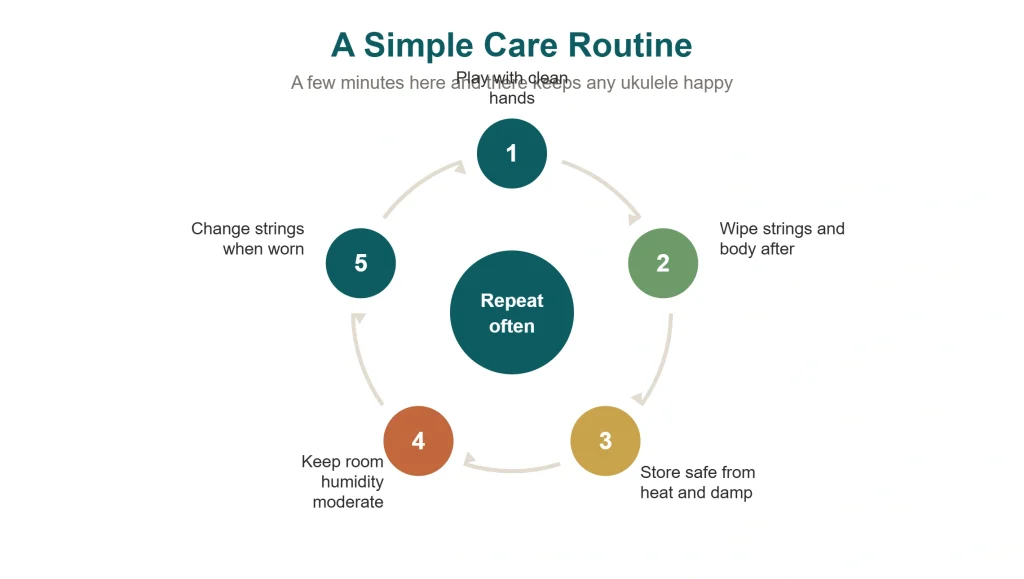
An easy routine that keeps any ukulele happy:
- Play with clean hands, and wipe the strings and body with a soft cloth afterward.
- Store it in a case or on a stand away from heat, sunlight, and damp.
- Keep the room humidity moderate, and use a humidifier or dehumidifier if your climate is extreme, which matters most for solid wood.
- Change the strings when they sound dull or look worn, and retune as they settle.
- Never leave it in a hot car or next to a radiator.
Keep Your Ukulele Playing for Years
Caring for a ukulele is simple: keep it clean, protect it from humidity and temperature extremes, store it safely, and change the strings when they wear out.
A few minutes of attention here and there will keep your instrument sounding sweet and looking good for many years, whether it is a budget laminate starter or a treasured solid-wood keepsake.
If you are still choosing an instrument, our buyer’s guide to choosing your first ukulele can help, and when you are ready to play, our complete beginner’s guide to playing the ukulele covers everything from tuning to your first song.
Frequently Asked Questions
Do I need to keep my ukulele in a case?
A case or padded gig bag is the safest way to store a ukulele, protecting it from dust, knocks, and humidity changes, and it is best for longer storage or a nicer instrument. If you play daily, a stand or wall hanger away from heat and sunlight is also fine and makes the ukulele easy to grab.
What humidity is best for a ukulele?
A relative humidity of roughly 45 to 55 percent is ideal for most ukuleles. Too dry and the wood can crack; too humid and the tone can muffle and glue joints can weaken. Solid-wood instruments are the most sensitive, so a case humidifier or room dehumidifier helps in extreme climates.
How often should I change my ukulele strings?
Many players change strings every few months with regular playing, or sooner if a string breaks, sounds dull, or looks worn. Wiping the strings after each session helps them last longer. Remember that new strings take a week or two to settle and hold their tuning.
Should I loosen the strings when storing my ukulele?
For everyday storage, no. Leaving the ukulele tuned to pitch is standard and keeps it ready to play. Some players loosen the strings a little for very long-term storage or shipping through extreme conditions. For home storage, keep it in tune and stored safely.
Can I leave my ukulele out on a stand?
Yes, a stand or wall hanger is fine and encourages you to play more often. Just keep the instrument away from direct sunlight, radiators, heating vents, and busy doorways where it could be knocked. Be aware it will collect more dust and be more exposed to room humidity than in a case.
How do I clean my ukulele?
Wipe the strings, fretboard, and body with a soft, dry, lint-free cloth after playing to remove oils and sweat. Avoid household cleaners and furniture polish, which can harm the finish. If you want a cleaning product, use one made for musical instruments, and play with clean hands.