
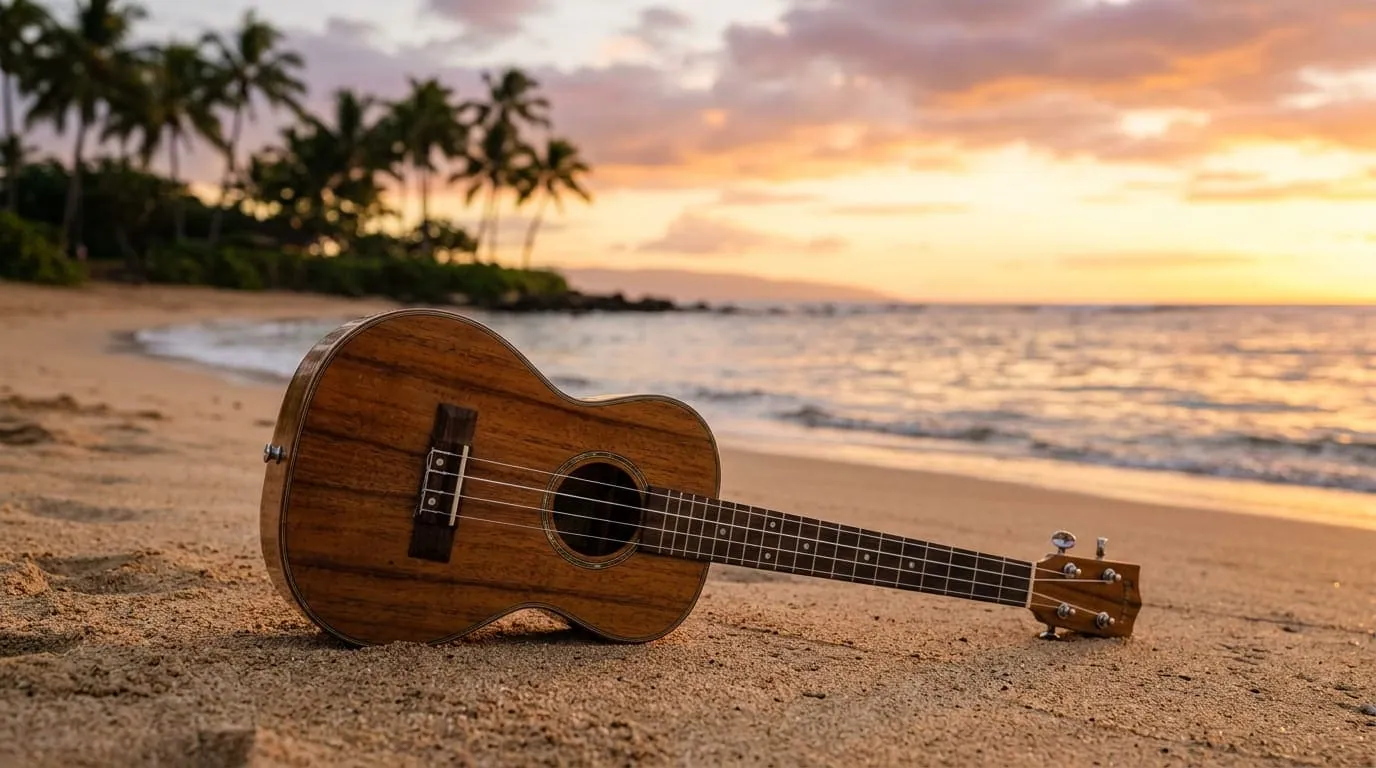
The ukulele is a small four-stringed instrument that originated in 1879 when Portuguese immigrants brought the machete to Hawaii. Local craftsmen adapted it, and it became an important part of Hawaiian culture before spreading worldwide.
Most people think the ukulele was born in Hawaii. It wasn’t.
Its story begins far away, on the Portuguese island of Madeira. There, a small four-stringed instrument called the machete first appeared.
In the late 19th century, Portuguese immigrants brought it to Hawaii. Local craftsmen reshaped it, and the instrument became something new. Over time, the ukulele grew beyond music. It became part of Hawaiian culture and later spread across the world. Today, people play it in many styles and places.
Ukulele history runs deeper than it first seems. Migration, craftsmanship, and cultural exchange all shaped it.
📌 Key Takeaway
The ukulele began as a Portuguese instrument in 1879 and evolved in Hawaii into a globally popular musical symbol.
The Origins of the Ukulele: From Portugal to Hawaii
The ukulele didn’t begin in Hawaii.
Its roots go back to Europe, where small stringed instruments were already part of everyday music. Long before it became a symbol of Hawaiian culture, these traditions shaped it, and immigrants carried it across the ocean.
Knowing where the ukulele came from helps explain how it evolved into something new.
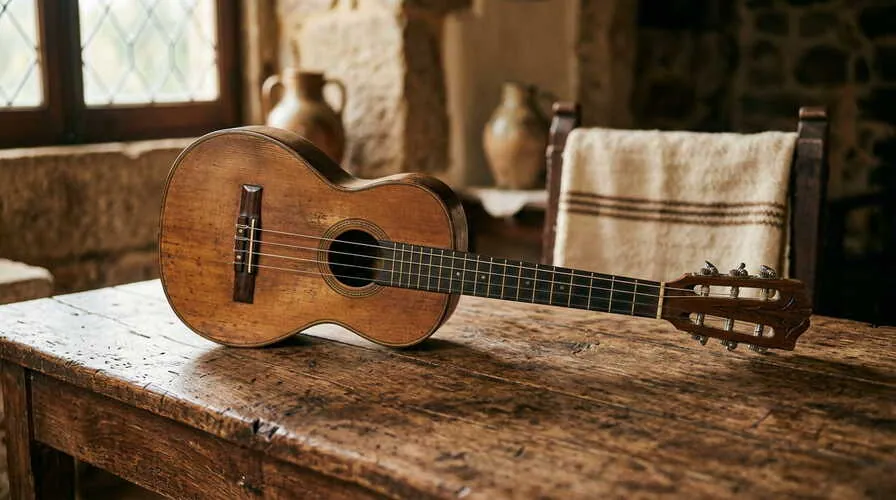
This comparison table shows the transformation from the Portuguese machete to the Hawaiian ukulele.
| Feature | Portuguese Machete (Braguinha) | Early Hawaiian Ukulele |
|---|---|---|
| Origin | Madeira, Portugal | Hawaii |
| Arrival Period | Pre-1879 | After 1879 |
| Strings | 4 strings | 4 strings |
| Material | Local European woods | Hawaiian woods (like koa) |
| Sound Style | Folk, rhythmic | Bright, melodic |
| Purpose | Traditional Portuguese music | Hawaiian music & performance |
| Cultural Role | Regional folk instrument | Symbol of Hawaiian identity |
| Development | Original instrument | Adapted and refined version |
The Machete de Braga: The True Ancestor
To understand where the ukulele comes from, you have to look beyond Hawaii.
Its story leads to Madeira, a Portuguese island where small string instruments were part of everyday life. One of them, the machete de braga (also called the braguinha, after the northern city of Braga), is often seen as the direct ancestor of the modern ukulele.
The machete was a small four-stringed instrument with a bright, lively sound. People played it in homes, gatherings, and local celebrations. It was easy to carry and simple to learn, which made it popular among everyday musicians.
These same qualities later became part of the ukulele’s identity. When the instrument traveled across the ocean, it carried this simplicity and charm with it.
The 1879 Arrival in Hawaii
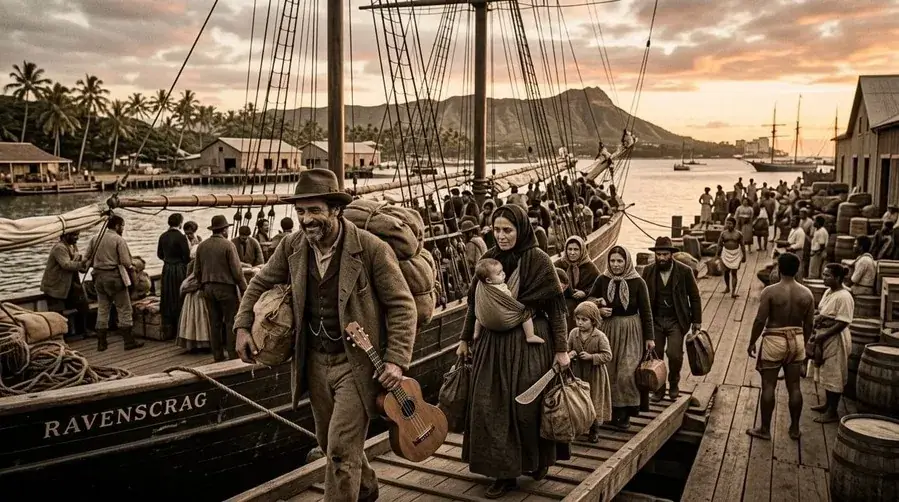
The story took a major turn in 1879. On August 23 of that year, Portuguese immigrants from Madeira arrived in Hawaii aboard a ship called the Ravenscrag. Many came to work on the sugar plantations, but some were skilled craftsmen who brought their traditions with them.
Among those traditions was the machete. The immigrants also carried a larger five-string instrument called the rajão, and its re-entrant tuning is often credited as the source of the ukulele’s distinctive high-G, G-C-E-A tuning. Hawaiians noticed the machete as soon as they heard it. The sound was bright and rhythmic, different from what local communities were used to, yet easy to connect with.
As the instrument spread, it began to change. Hawaiian musicians and craftsmen adjusted its shape, refined its design, and developed new ways to play it.
At that point, it was no longer just a Portuguese instrument. It was beginning to take on a new identity shaped by Hawaiian culture.
Historical Sources and Early Documentation
Newspaper reports, immigration records, and cultural documentation from the late 19th century support much of early ukulele history. These sources help historians trace how Portuguese musical traditions connected with Hawaiian culture after immigrants arrived in 1879.
Researchers also point to the work of early craftsmen such as Manuel Nunes, Augusto Dias, and Jose do Espirito Santo, whose instrument-building techniques influenced the development of the traditional Hawaiian ukulele.
Although some details of the instrument’s earliest evolution are still debated, most historical accounts agree that the ukulele emerged through a blend of Portuguese influence and Hawaiian cultural adaptation.
The First Ukulele Makers
At the center of this transformation were three individuals: Manuel Nunes, Augusto Dias, and Jose do Espirito Santo. All three had sailed on the Ravenscrag, and they are often credited with building the first true ukuleles in Hawaii.
They took inspiration from the machete but adjusted the design to suit local preferences, settling on the bright re-entrant G-C-E-A tuning still standard today. Their work laid the foundation for what the instrument would become. Through their craftsmanship, the early ukulele began to take shape, both in form and identity.
What started as an imported instrument turned into a symbol of a new cultural expression. This shift defines ukulele background history. It covers where the instrument came from and how it changed once it arrived.
The Rise of the Ukulele in Hawaii
The ukulele’s history in Hawaii marks the moment it came into its own.
What started as an imported instrument became part of everyday life on the islands. People played it in homes, gatherings, and celebrations, and its sound blended with local traditions.
The history of the ukulele in Hawaii goes beyond music. The culture around it embraced the instrument. Musicians shaped its sound, while cultural leaders recognized its place in Hawaiian identity.
King Kalākaua and the Royal Influence
The history of the ukulele in Hawaii shows more than an instrument spreading. It shows how the instrument became part of a nation’s identity.
After arriving in the islands, the ukulele found its place in local music and daily life. Its rise did not happen by chance. Royal support played a major role.
King David Kalākaua, who reigned from 1874 to 1891 and earned the nickname the Merrie Monarch, committed himself to preserving Hawaiian culture. As outside influences grew, he encouraged traditional music, dance, and storytelling. The ukulele became part of this cultural revival.
Under his patronage, the instrument appeared in royal gatherings, hula performances, and celebrations. This gave it visibility across the islands and helped it gain wider acceptance.
Over time, the ukulele became more than a musical instrument. It came to represent Hawaiian creativity and identity. People played it in homes, festivals, and community events, where its light sound and simple design made it easy to pick up.

What Does “Ukulele” Mean?
The name itself tells a story.
The word “ukulele” is often translated as “jumping flea.” It comes from the Hawaiian words ʻuku, meaning flea, and lele, meaning to jump. Many people connect this to the quick movement of a player’s fingers across the strings.
There is another interpretation. Queen Liliʻuokalani, Kalākaua’s sister and successor, reportedly preferred the meaning “the gift that came here,” from uku (gift) and lele (to come or arrive). This version is less common, but it reflects how Hawaii received the instrument.
Whatever meaning you prefer, the name captures the character of the instrument. It feels lively, simple, and tied to the culture that embraced it.
Common Myths About Ukulele History
People often simplify the history of the ukulele in ways that overlook how connected the instrument is to culture and music.
One common misconception is that people always saw the ukulele as a beginner or novelty instrument. In reality, professionals have long played it in performance, traditional Hawaiian music, and live entertainment.
Another misunderstanding is that the ukulele became popular only recently because of social media. Online platforms helped introduce it to a new generation, but the instrument saw major waves of popularity throughout the 20th century, above all during the 1920s and 1950s.
Some people also assume the ukulele remained unchanged over time. Different sizes, materials, and playing styles emerged as the instrument spread across the world.
These misconceptions reveal how much the ukulele has evolved beyond its early origins.
Ukulele History Timeline (1879–Present)
The ukulele history timeline shows how a small island instrument became a global phenomenon. This timeline lays out the history of the ukulele stage by stage.
From its arrival in Hawaii in 1879 to its global popularity today, each stage shows how the instrument developed and spread. Changes in culture, music, and technology all played a role in shaping its journey.
The key moments below highlight how a small instrument from the islands grew into something recognized around the world.
| Year / Period | Key Event | Why It Matters |
|---|---|---|
| 1879 | Portuguese immigrants bring the machete to Hawaii | Marks the origin of the ukulele and its transformation into a Hawaiian instrument |
| 1915 | Panama-Pacific International Exposition (San Francisco) | Introduced the ukulele to the United States and sparked national interest |
| 1920s–1930s | First global popularity boom | Widely used in jazz, vaudeville, and home entertainment due to affordability |
| 1950s | Plastic ukulele production begins | Made the instrument accessible to a wider audience, especially beginners |
| 1990s | Revival through Hawaiian music (Israel Kamakawiwoʻole) | Brought global attention back to the ukulele and revived its popularity |
| Modern Era | Growth through YouTube and social media | Expanded worldwide reach and made learning the ukulele easier than ever |
Each of these moments played a role in shaping how the ukulele evolved and spread across the world.
1879 – Arrival in Hawaii
Portuguese immigrants brought the machete to Hawaii, introducing a new musical style to the islands. Local craftsmen adapted the instrument, shaping what would become the early ukulele. This is where the history of the ukulele begins.
1915 – Panama-Pacific Exposition
The ukulele gained major exposure at the Panama-Pacific International Exposition in San Francisco. Hawaiian musicians, among them George E. K. Awai and his Royal Hawaiian Quartet, performed for large audiences, sparking widespread interest across the United States. This event helped introduce the instrument to mainstream American culture.
1920s–1930s – First Global Boom
During this period, the ukulele took off in the United States and beyond. Players used it across jazz, vaudeville, and home entertainment, drawn by its low price and ease of learning. Many historians consider this era the first major global boom in ukulele history.
1950s – Plastic Ukulele Revolution
The introduction of plastic ukuleles made the instrument cheaper and more accessible to the general public. Mario Maccaferri, an Italian-born luthier, produced them by the millions, and television host Arthur Godfrey helped popularize them on his broadcasts. This helped expand the ukulele’s reach to a younger generation.
1990s – Revival Era
Interest in the ukulele returned with the rise of Hawaiian music on the global stage. Israel Kamakawiwoʻole’s 1993 medley of “Somewhere Over the Rainbow” and “What a Wonderful World” brought renewed attention to the instrument through one of the most widely recognized recordings ever made on a ukulele. This period marked a cultural and musical revival.
Modern Era – Social Media & Global Popularity
The ukulele has seen a new wave of popularity through YouTube and social media, accelerated when Jake Shimabukuro’s fingerstyle cover of “While My Guitar Gently Weeps” went viral in 2006. Musicians around the world now share tutorials, covers, and performances online. Today, the instrument is more popular than ever, reaching audiences across all age groups and genres.
🎸 Did you know?
The ukulele’s first big craze came during the 1920s Jazz Age, and its low cost helped it stay popular through the Great Depression of the 1930s.
Watch a short overview of ukulele history:
How the Ukulele Changed and Evolved Over Time
Ukulele history covers more than key events. It also covers how the instrument changed over time.
As it moved across cultures and generations, its design, sound, and role in music evolved. What began as a simple handmade instrument became something produced and recognized around the world.
Even with these changes, the ukulele kept its basic character. It remained small, easy to play, and accessible to many people.
You can see this evolution in how the instrument developed from its early form to the versions people use today.
| Aspect | Early Ukulele | Modern Ukulele |
|---|---|---|
| Materials | Handmade using local woods like koa | Wide range including mahogany, laminate, and synthetic materials |
| Construction | Fully handcrafted by artisans | Combination of handcrafted and mass production |
| Availability | Limited to Hawaii and small communities | Available worldwide through global manufacturing |
| Sound Style | Traditional Hawaiian tone | Used across multiple genres (pop, indie, folk) |
| Audience | Local musicians and cultural use | Global audience including beginners and professionals |
| Learning Access | Learned through community and tradition | Online tutorials, apps, and digital learning platforms |
Changes in Design and Materials
Artisans made early ukuleles by hand using traditional woodworking techniques. Many came from local Hawaiian woods such as koa, which gave them a warm, distinctive sound. These instruments looked simple but showed careful building, reflecting both Portuguese influence and Hawaiian craftsmanship.
As the ukulele became more popular, makers began using different materials and production methods. Woods like mahogany became common, and factories took over some of the work once done by hand. By the mid-20th century, plastic versions appeared, making the ukulele more affordable and easier to produce.
Even with these changes, the basic design stayed the same. The ukulele remained small, simple, and easy to play. This ability to adapt without losing its identity is a key part of its evolution.
Expansion Beyond Hawaii
The history of the ukulele instrument took a major turn once it moved beyond the Hawaiian Islands.
After gaining attention in the United States, the instrument began spreading to other parts of the world. Musicians, travelers, and popular media all played a role in carrying it further.
As it reached new regions, the ukulele adapted to different styles of music. It appeared in classrooms, folk traditions, and modern pop songs. Its small size and simple design made it easy for beginners to pick up, which helped it grow even faster.
Over time, the ukulele became part of music far beyond the islands. Even so, it kept a strong connection to its Hawaiian roots.
Influence on Modern Music
Today, musicians use the ukulele across many styles. It appears in traditional Hawaiian songs, as well as pop, indie, and experimental genres.
Musicians around the world use it for its simple structure and expressive sound. It is easy to learn, but still versatile enough for different musical styles. Online platforms, live performances, and recordings have all helped bring the instrument to new audiences.
Even as it grows in popularity, the ukulele has stayed true to its character. It remains simple, approachable, and easy to find. That balance is one reason people keep playing it today.
Different Types of Ukuleles and Their Historical Development
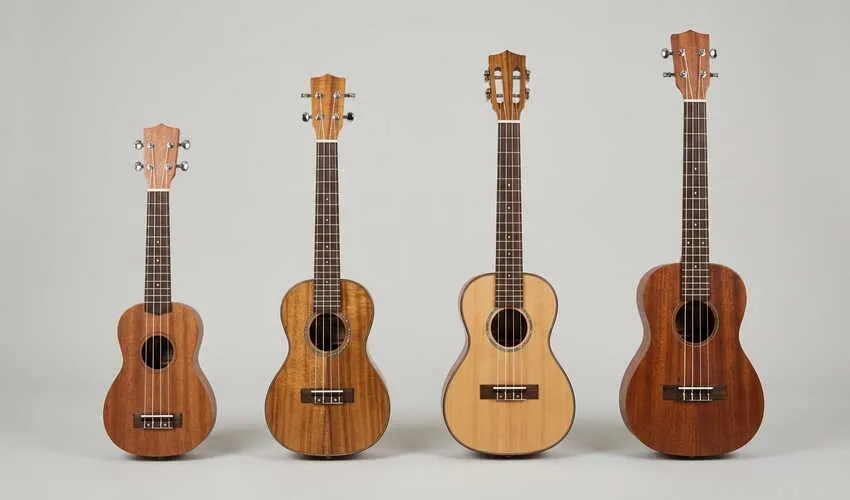
As ukulele history progressed, the instrument did not remain limited to a single size or style. Musicians began to look for different sounds, volumes, and playing styles. In response, new variations of the instrument started to appear.
Over time, these changes led to several types of ukuleles. Each one offered something different while keeping the basic character of the instrument.
Soprano Ukulele (The Original Form)
The soprano ukulele, at around 21 inches long, is the oldest and most traditional version of the instrument.
It reflects the early design that developed in Hawaii after the Portuguese machete arrived, including the standard re-entrant G-C-E-A tuning. Its small size and bright tone suited traditional Hawaiian music.
Even today, the soprano remains the most recognizable type of ukulele. It represents the instrument in its simplest and most original form.
Concert and Tenor Ukuleles
As the ukulele became more popular in the early 20th century, players started looking for a fuller sound and more space on the fretboard.
This led to the concert (around 23 inches) and tenor (around 26 inches) ukuleles, mostly during the 1920s. The concert offered more volume and comfort, while the tenor produced a deeper, richer tone.
Over time, the tenor became a preferred choice for performers, as it allowed for more expressive playing.
Baritone Ukulele History
The baritone ukulele, at around 30 inches, appeared in the late 1940s as players looked for an instrument closer to the guitar.
It is larger than other ukuleles and produces a deeper, warmer sound. Because it is tuned D-G-B-E, like the top four strings of a guitar, many guitar players found it easier to transition to the ukulele using the baritone.
This version helped expand the instrument’s appeal, bringing in musicians who wanted a familiar playing experience with a different sound.
Banjo Ukulele (Banjolele)
The banjo ukulele, often called the banjolele, became popular in the 1910s and 1920s.
It combines a banjo-style body with a ukulele neck, creating a louder, more percussive sound. That made it useful in performance settings where volume mattered, above all before electronic amplification arrived. The British entertainer George Formby made it famous through his stage and film performances.
Performers used it in early jazz and stage shows, where its sharp sound cut through.
🎸 Did you know?
The baritone ukulele is tuned like the highest four strings of a guitar, making it easier for guitar players to switch.
Famous Ukulele Brands and Their Legacy
As ukulele history unfolded, certain brands played a major role in how people built, sold, and recognized the instrument around the world. These brands did more than build instruments.
They influenced design, set standards for quality, and helped bring the ukulele to a wider audience beyond Hawaii.
People still recognize some of these early makers for their role in the instrument’s history.
| Brand | Origin | Founded | Historical Contribution |
|---|---|---|---|
| Kamaka | Hawaii | 1916 | One of the oldest ukulele makers; preserved traditional Hawaiian craftsmanship and introduced the famous Pineapple ukulele |
| Martin | United States | 1833 (ukuleles from ~1916) | Helped popularize the ukulele in mainland America during the early 20th century |
| Gibson | United States | 1902 (ukuleles from the 1920s) | Contributed to the commercial expansion of ukuleles during the American music boom |
| Kala | United States | 2005 | Modern brand focused on accessibility and global distribution, helping expand ukulele popularity worldwide |
Kamaka: Hawaii’s Historic Brand
Kamaka is one of the most important names associated with the ukulele history. Founded in Honolulu in 1916 by Samuel Kaialiilii Kamaka, the company is known for maintaining traditional craftsmanship while introducing small design improvements.
Its instruments carry a strong link to Hawaiian culture, and many players treat the brand as a symbol of authenticity and quality. Kamaka shaped how builders made and preserved the ukulele over time, and it patented its distinctive oval Pineapple ukulele in 1928.
Martin and Gibson: Mainland Expansion
As the ukulele became popular in the United States, major instrument makers such as Martin and Gibson began producing their own versions.
Their involvement helped bring the ukulele into a wider market, making it more accessible beyond Hawaii. Martin, founded in Nazareth, Pennsylvania, in 1833, began building ukuleles around 1916 and became well known for producing high-quality instruments during the early 20th century.
The role of these companies marks an important phase in martin ukulele history and gibson ukulele history, where the instrument expanded beyond Hawaii and reached a wider audience.
Modern Brands and Global Production
In more recent years, brands like Kala, founded in California in 2005, have contributed to the global growth of the ukulele. These companies focus on accessibility, offering instruments for beginners while maintaining consistent quality.
The rise of modern manufacturers reflects how the instrument keeps evolving. Kala ukulele history represents this new phase, where production spans the globe and the ukulele reaches more people than ever before.
Interesting Facts About the Ukulele
The ukulele may look simple, but its history is full of surprising details. These quick facts highlight some lesser-known moments that make ukulele history even more interesting.
10 Fun and Surprising Ukulele Facts
- The name “ukulele” means “jumping flea”
The term comes from Hawaiian words ʻuku (flea) and lele (to jump), likely referring to the fast movement of a player’s fingers across the strings.
- The ukulele was once considered a “royal instrument”
King Kalākaua promoted it in royal gatherings, helping it become a symbol of Hawaiian culture rather than just a folk instrument.
- It became popular in the U.S. because of a world fair
The 1915 Panama-Pacific Exposition introduced the ukulele to a wide American audience, sparking a nationwide trend.
- Plastic ukuleles made it a household instrument
In the 1950s, mass-produced plastic models made the ukulele affordable for millions, especially students and beginners.
- An astronaut helped keep its popularity alive
Neil Armstrong was reported to play the ukulele during his downtime, showing how widely loved the instrument had become.
- It is one of the easiest instruments to learn
Its simple structure and fewer strings make it accessible, which is one reason it has remained popular across generations.
- Early ukuleles were often handmade
The first instruments in Hawaii were carefully crafted by skilled artisans using local wood, making each one unique.
- The ukulele became popular during the Great Depression
Its low cost made it one of the few instruments people could afford, increasing its popularity in homes across America.
- There are millions of ukulele players worldwide today
Thanks to the internet and social media, the instrument has reached a global audience and continues to grow.
- A Beatle was a devoted collector
George Harrison loved the ukulele so much that he often carried several with him and gave them away to friends, helping spark renewed interest in the instrument.
Ukulele Facts for Kids
These fun, simple ukulele facts for kids make learning about the instrument easy and enjoyable.
- The ukulele has only four strings
That’s fewer than a guitar, which makes it easier to play.
- It is small and easy to carry
You can take a ukulele almost anywhere, even on trips.
- It makes a happy, bright sound
The ukulele is often used in fun and cheerful songs.
- Kids can learn it quickly
Many beginners can play simple songs in just a few days.
- It started in Hawaii
Even though it came from another instrument, it became famous in Hawaii.
Why the Ukulele Is Still Popular Today
The story of ukulele history does not end in the past. In recent years, it has reached new audiences around the world. Its small size, low cost, and simple learning curve make it appealing to beginners, while its sound keeps it interesting for experienced players.
The rise of online platforms has also played a role. People can now learn, share, and perform music with less friction, and the ukulele fits that space.
Even as music trends change, the instrument remains easy to pick up and enjoyable to play. That is one of the main reasons it continues to stay relevant.

The Internet and Social Media Revival
One of the biggest drivers of modern ukulele popularity is the rise of the internet. Platforms like YouTube, TikTok, and Instagram have made it easier for people to learn and share music without formal training. Thousands of tutorials, covers, and short performances have introduced the ukulele to a global audience.
Beginners gravitate to the instrument because they can start playing fast and see progress in a short time. That accessibility has made the ukulele popular among younger audiences and casual learners. As more people share their music online, the instrument grows in visibility and reach.
Ukulele in Contemporary Music
The ukulele has also found a place in modern music across different genres. It is no longer limited to traditional Hawaiian songs. Today, it appears in pop, indie, and acoustic performances, often used to create a softer and more intimate sound.
Many artists use the ukulele to add a unique texture to their music, while others build entire performances around it. This shift shows how the instrument has adapted to modern trends while staying true to its roots. As a result, the ukulele instrument history continues to evolve, shaped by both tradition and new creative influences.
The ukulele’s continued growth highlights its lasting appeal. Even in a fast-changing music landscape, it remains one of the most approachable and most played instruments in the world.
🎸 Did you know?
The ukulele was once considered a “toy instrument” before becoming a global music icon.
Ukulele History for Kids (Simple Explanation)
The ukulele is a small musical instrument that looks like a guitar. It first came from Portugal, and immigrants brought it to Hawaii in the late 1800s.
In Hawaii, people changed its design and made it part of their music and culture. Over time, the ukulele became popular around the world because it is easy to play and sounds cheerful.
👉 Want a simple and fun version for students?
Read our full guide on Ukulele History for Kids.
The Lasting Impact of the Ukulele in Music and Culture
Movement, adaptation, and cultural exchange shaped the history of the ukulele.
What began as a small instrument in Portugal found a new life in Hawaii, where it developed into something unique. From there, it spread across the world and continued to evolve with each generation of players.
Over time, the ukulele became more than just an instrument. It came to represent creativity, community, and a shared musical experience.
Even today, it continues to grow through music, education, and online platforms. Its simple design makes it easy to learn, but its sound and character keep it meaningful.
The ukulele’s story is still unfolding. It changes with time, but it never loses the qualities that made it special in the first place.
Download This Ukulele History Guide (PDF)
Want to save this guide for later or use it for study?
You can download a clean, printable version of this ukulele history article as a PDF. It’s useful for students, teachers, or anyone who wants a quick reference without going online.
Frequently Asked Questions
Where did the ukulele originate?
The ukulele originated from the Portuguese island of Madeira. It evolved from a small four-stringed instrument known as the machete or braguinha, which was later introduced to Hawaii.
Why is the ukulele associated with Hawaii?
The ukulele became closely linked to Hawaii after it was adopted by local musicians and supported by Hawaiian royalty. It became an important part of Hawaiian music and culture, which is why many people associate it with the islands.
What does the word “ukulele” mean?
The word “ukulele” is often translated as “jumping flea.” It likely refers to the quick movement of a player’s fingers across the strings.
How did the ukulele become popular worldwide?
The ukulele gained global popularity in the early 20th century, especially after the 1915 Panama-Pacific Exposition in San Francisco. It later saw revivals through music trends, media exposure, and online platforms.
What instrument did the ukulele evolve from?
The ukulele evolved from the Portuguese machete (or braguinha), a small stringed instrument brought to Hawaii by immigrants.
Why is the ukulele still popular today?
The ukulele remains popular because it is easy to learn, affordable, and versatile. It is widely used in modern music, education, and online communities.
3 thoughts on “The History of Ukulele – Origins, Timeline, and Evolution”