
The wood a ukulele is built from shapes its tone, its looks, its durability, and its price. Walk into a shop or browse online and you will see terms like koa, mahogany, spruce, laminate, and solid wood with little explanation.
This guide clears up what each one means, how it affects the sound, and how much it should matter when you choose an instrument as a beginner.
Why Does the Wood Matter?
A ukulele produces sound when its strings vibrate and that vibration passes into the body, which amplifies it. The wood, and how a builder puts it together, shapes how those vibrations resonate and gives each instrument its own voice.
Wood also affects how the ukulele looks, how well it survives humidity and knocks, and how much it costs. Build quality, setup, and the size of the instrument affect the sound at least as much as the wood species, especially at beginner price levels.
Laminate vs Solid Wood: The Most Important Distinction
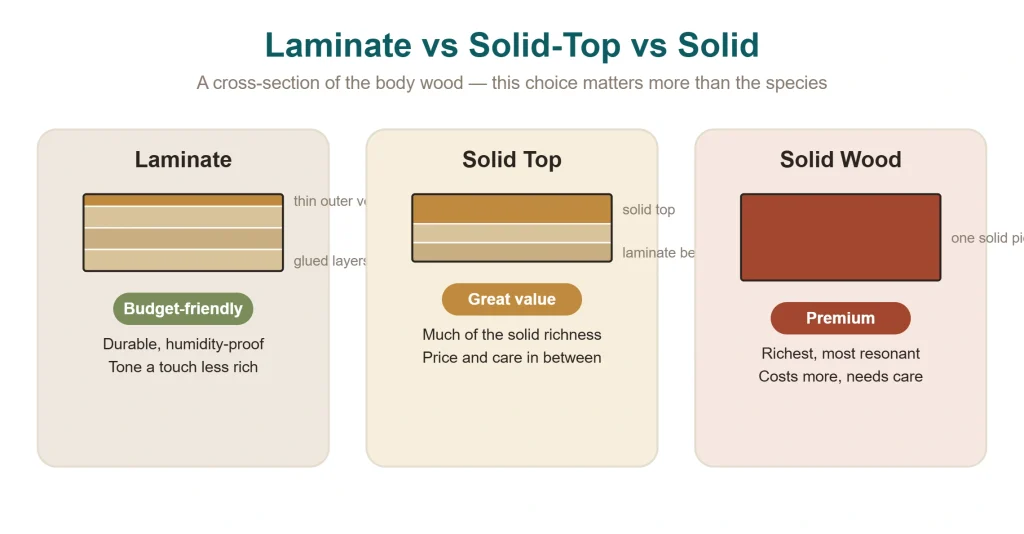
Before the specific wood species, the biggest construction choice is whether a ukulele uses laminate or solid wood. This matters more for a beginner than which tree the wood came from.
Laminate Wood
Laminate uses thin layers of wood pressed and glued together, with a more attractive wood on the outer layer. Laminate ukuleles are more affordable, more durable, and much less sensitive to changes in temperature and humidity, so they are less likely to crack.
The trade-off is that they are generally described as sounding a little less resonant and rich than solid wood. For a first instrument, a good laminate ukulele is a sensible, worry-free choice.
Solid Wood
Solid-wood ukuleles are built from single pieces of wood. They are generally described as sounding richer, fuller, and more resonant, and many players believe they “open up” and improve in tone as they age and the wood settles over years of playing.
The downsides are a higher price and greater sensitivity to humidity swings, meaning they need a little more care. Solid wood is a wonderful choice once you know you are committed to playing.
The Middle Ground: Solid Top, Laminate Back and Sides
Many mid-priced ukuleles use a hybrid: a solid wood top with laminate back and sides. Because the top does the most work in producing tone, this design captures much of the richness of solid wood while keeping the price and durability closer to laminate. It is an excellent value sweet spot for players ready to step up from an all-laminate beginner instrument.
The Main Ukulele Tonewoods
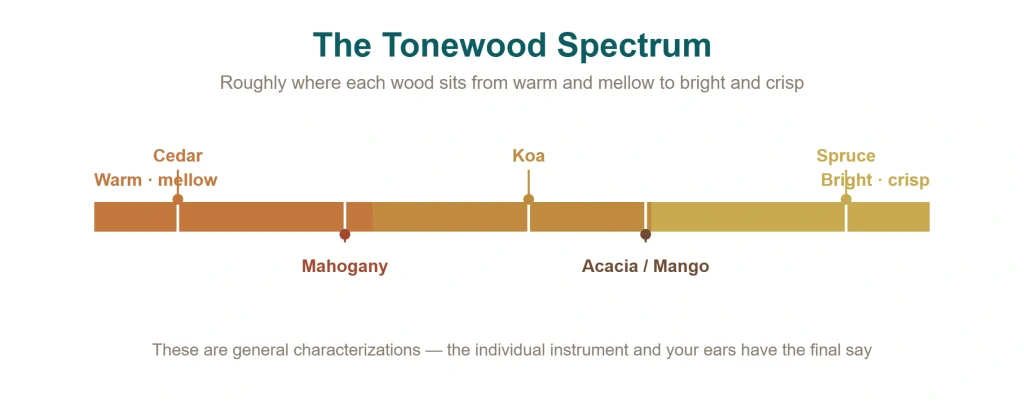
The top, or soundboard, has the biggest influence on tone, while the back and sides play a smaller role. The tone descriptions below are the generally accepted characterizations; your ears and the individual instrument have the final say.
Koa
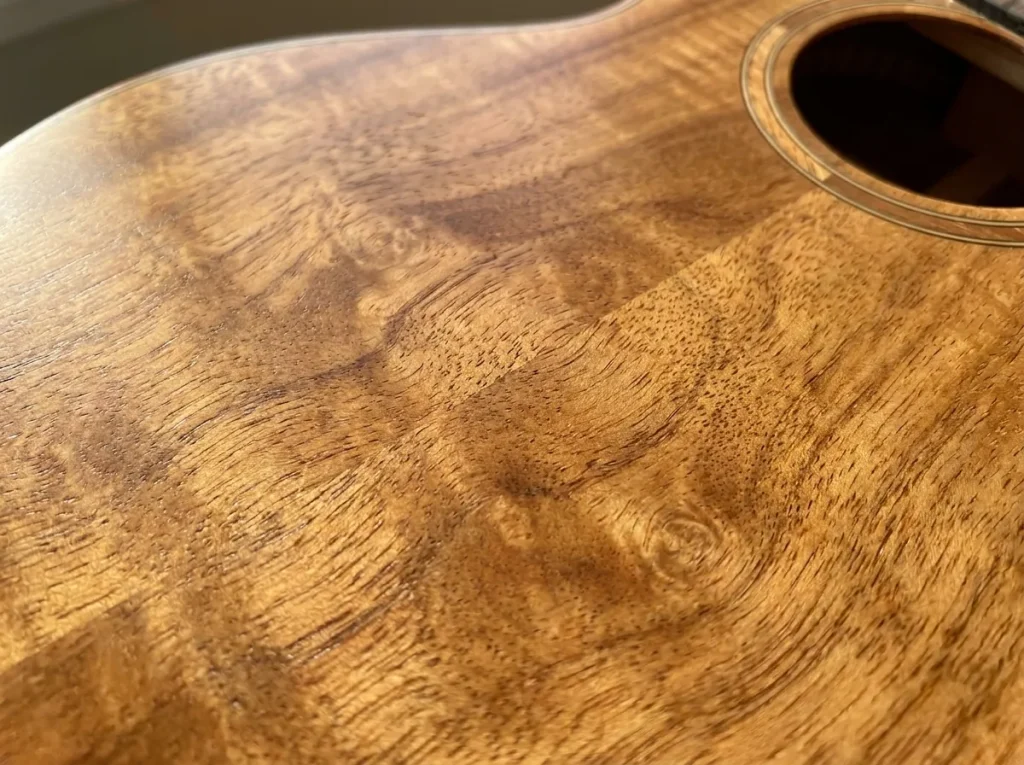
Koa (from the tree Acacia koa) is native to Hawaii and is the traditional, original wood of the ukulele, which gives it deep cultural and historical significance. It is prized for a finely figured, golden-brown appearance and a balanced tone that sits between bright and warm. Koa is said to start out bright and grow warmer and richer as the instrument ages.
Because it is scarce and much sought after, koa is one of the more expensive tonewoods. You can read more about the instrument’s Hawaiian roots in our guide to the history of ukulele brands.
Mahogany
Mahogany is one of the most common ukulele woods. It is generally described as producing a warm, mellow, focused sound with a strong midrange and softer highs, which many people find pleasant and easy on the ear.
It is more affordable and easier to find than koa, and its understated brown color has a classic look. Mahogany appears at every price level, from budget laminate instruments to fine solid-wood ones, making it a dependable all-round choice.
Spruce
Spruce is a light, stiff wood used as a top rather than for the whole body, and it shows up on most guitars. It is generally described as bright, crisp, and loud, with strong projection and clear notes, so it suits players who want volume and definition. Builders pair spruce with warmer woods for the back and sides to balance its brightness. Its pale color also gives an instrument a clean, classic look.
Cedar
Cedar is another top wood, softer than spruce, and generally described as warmer and mellower with a less bright attack. Players who find spruce too sharp tend to prefer cedar for its smooth, rounded tone, and it suits gentle fingerstyle playing.
Acacia and Mango
Acacia is a close relative of koa; koa is in fact a species of acacia. It offers a similar figured look and balanced tone at a lower price, so sellers market it as a koa alternative. Mango, also grown in Hawaii, is another attractive wood with a bright yet warm tone and striking grain patterns, popular for its looks as much as its sound.
Tonewood Comparison
| Wood | General tone | Typical use | Notes |
|---|---|---|---|
| Koa | Balanced, bright warming to rich | Whole body | Traditional Hawaiian wood; premium price |
| Mahogany | Warm, mellow, strong midrange | Whole body | Common and affordable; all price levels |
| Spruce | Bright, crisp, loud | Top only | Great projection; often paired with warm woods |
| Cedar | Warm, mellow, smooth | Top only | Softer alternative to spruce |
| Acacia | Balanced, similar to koa | Whole body | More affordable koa alternative |
| Mango | Bright yet warm | Whole body | Striking grain; prized for looks |
How Much Should Wood Matter to a Beginner?
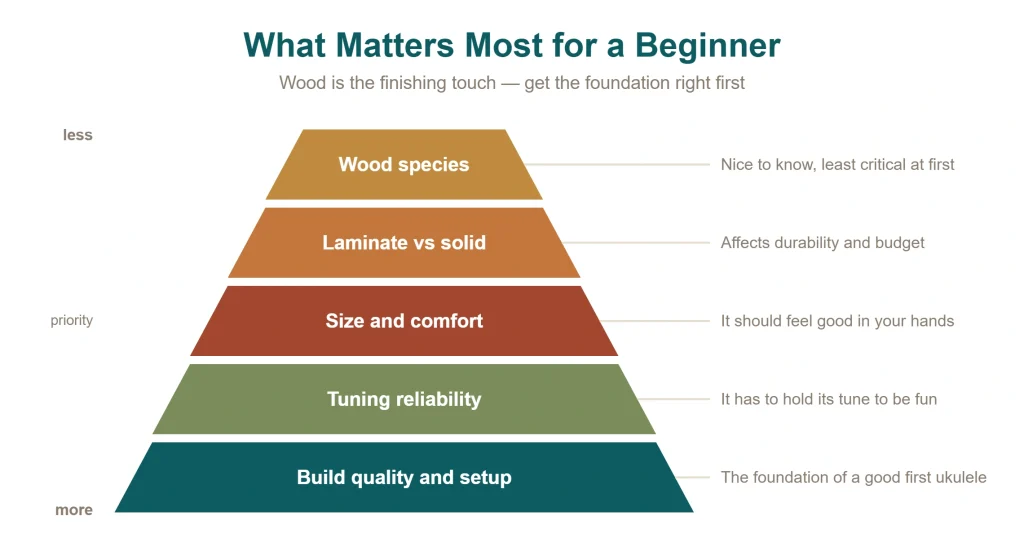
For your first ukulele, the wood species should not be your top priority. At beginner price points, most instruments are laminate, and the differences between wood species are subtle next to the things that shape your experience: whether the ukulele stays in tune, how comfortable it feels, and whether it is set up well. A well-built laminate mahogany ukulele will serve a beginner better than a poorly made instrument in a fancier wood.
Tonewood becomes much more meaningful once you move up to solid-wood instruments and start to develop your own taste in sound. At that point, choosing between the warm midrange of mahogany, the balanced richness of koa, or the bright projection of a spruce top becomes a rewarding personal decision. For your first purchase, focus on size, build quality, and tuning reliability, all covered in our buyer’s guide to choosing your first ukulele.
Choosing With Your Ears
Understanding tonewoods helps you make sense of what you see when shopping, but the best approach is to listen. Koa carries tradition and balance, mahogany offers warmth and value, and spruce brings brightness and volume, while laminate versus solid wood is the choice that matters most for durability and budget. As a beginner, prioritize a well-built, in-tune instrument, and let your appreciation for tonewoods grow as your playing does.
To compare the physical sizes alongside these woods, see our guide to soprano vs concert vs tenor ukuleles, and when you are ready to play, start with our complete beginner’s guide to playing the ukulele.
Frequently Asked Questions
What is the best wood for a ukulele?
There is no single best wood; it depends on the sound you want. Koa is the traditional, prized choice with a balanced tone, mahogany offers a warm and mellow sound at an affordable price, and spruce tops give bright, loud projection. For most players, mahogany and koa are the most popular all-round body woods.
Is laminate or solid wood better for beginners?
Laminate is the better choice for most beginners because it is affordable, durable, and resistant to humidity. Solid wood sounds richer and can improve with age, but it costs more and needs more care. Many players start on laminate and upgrade to solid wood once they are committed.
Why are koa ukuleles so expensive?
Koa is native to Hawaii, scarce, and much sought after for both its figured appearance and its cultural role as the traditional ukulele wood. That combination of limited supply and high demand makes koa one of the more expensive tonewoods.
Does the wood really change how a ukulele sounds?
Yes, with a caveat. Wood does influence tone, above all the top wood, and most of all on solid-wood instruments. Build quality, setup, string choice, and body size affect the sound at least as much, and that holds most at beginner price levels where most ukuleles are laminate.
What is a solid-top ukulele?
A solid-top ukulele has a top made from a single piece of wood, paired with laminate back and sides. Because the top has the greatest effect on tone, this design delivers much of the richness of full solid wood while keeping the price lower and the instrument more durable. It is a popular step up from all-laminate beginner ukuleles.
2 thoughts on “Best Ukulele Woods Explained: Koa, Mahogany, Spruce, and Laminate vs Solid”