
Strings are the part of your ukulele you touch and hear most, yet they are easy to forget. Fresh strings can make even a modest ukulele sound bright and lively, while old, worn strings leave the best instrument sounding dull and struggling to stay in tune. This guide explains how often to change your strings, how to spot when they are worn out, and how to choose the right type for your ukulele and your taste.
How Often Should You Change Ukulele Strings?
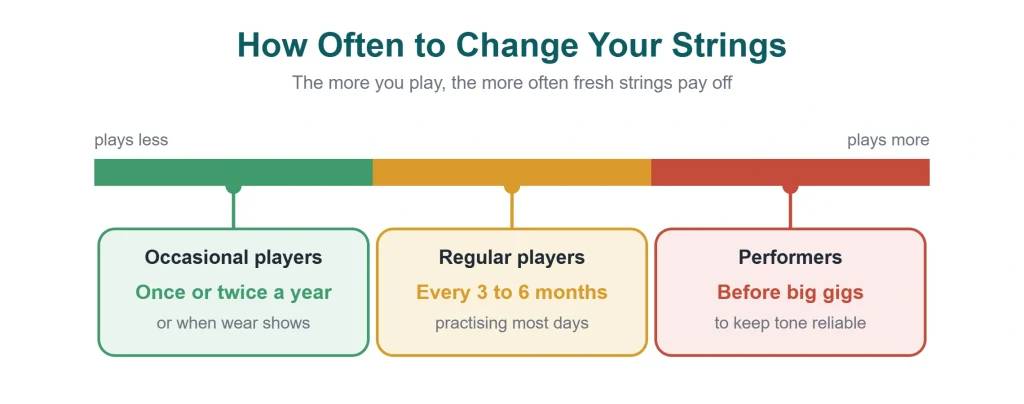
There is no single fixed schedule, because it depends on how much you play, how hard, and the type of strings. As a general guide:
- Regular players who practice most days change strings every three to six months.
- Occasional players may go much longer, changing once or twice a year, or when the strings show signs of wear.
- Performers and heavy players may change more often, before important gigs, to keep the tone fresh and reliable.
Rather than following a strict calendar, change your strings when they start to sound or feel worn, using the signs below. Replace any string right away if it breaks.
Signs Your Strings Need Changing
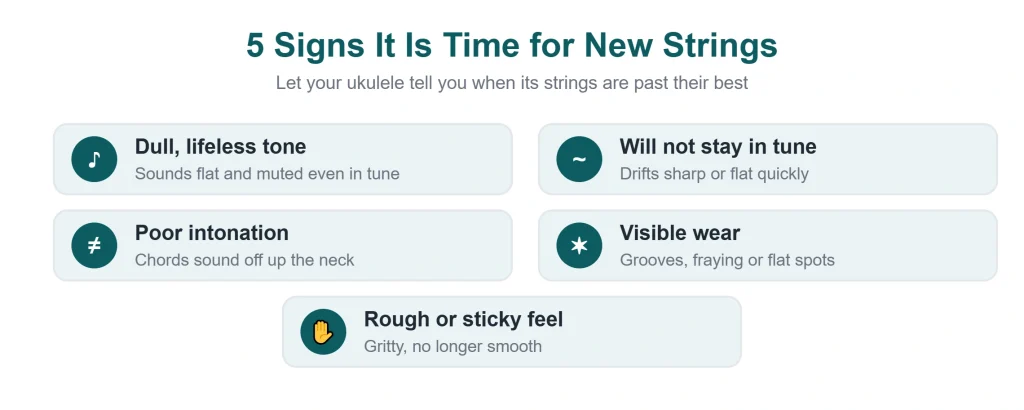
Your ukulele will tell you when its strings are past their best. Watch and listen for these signs:
- Dull, lifeless tone. If your ukulele sounds flat and muted even when in tune, tired strings are the likely cause.
- Trouble staying in tune. Old strings get harder to tune and drift out of tune faster.
- Poor intonation. If chords sound off even when the open strings are in tune, worn strings may be to blame.
- Visible wear. Discoloration, grooves, fraying, or flat spots where the strings meet the frets all signal it is time.
- Rough or sticky feel. Strings that feel gritty or no longer smooth under your fingers are worn.
Do Strings Wear Out Even If You Don’t Play?
Yes, though slower. Strings age through exposure to air, moisture, and the oils left from handling, so a set can lose its brightness even on an instrument that sits unplayed. Playing wears them faster, but a very old set is worth replacing regardless of how much use it has had. Wiping the strings with a soft cloth after each session, as covered in our guide on how to care for and store your ukulele, extends their life.
Which Type of Ukulele String Should You Choose?
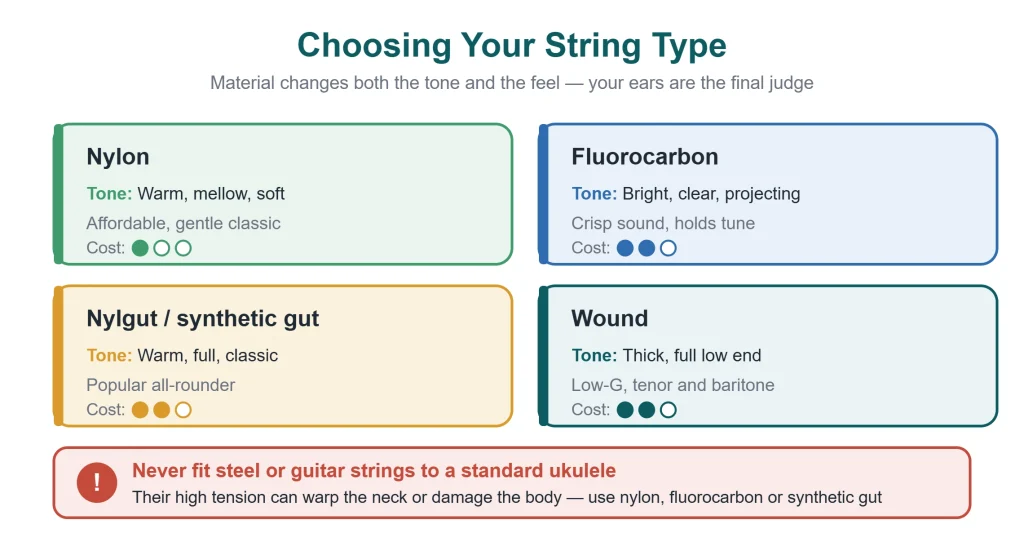
Most ukulele strings are made from synthetic materials rather than metal, and the type you choose affects both the tone and the feel. Tone descriptions here are the generally accepted characterizations; your ears are the final judge.
Nylon
Nylon is the classic, affordable ukulele string material. It is generally described as producing a warm, mellow, soft tone, and it is gentle on the fingers. Nylon strings are a dependable, budget-friendly choice, though they can take a little longer to settle in tune and react more to temperature and humidity than some newer materials.
Fluorocarbon
Fluorocarbon strings have become popular. Because the material is denser than nylon, the strings are thinner for the same pitch, and they are generally described as brighter and clearer with more projection. Many players also find they hold their tuning better. They cost a little more than nylon but are a favorite for those who want a crisp, articulate sound.
Nylgut and Synthetic Gut
Synthetic gut strings, best known under the brand name Aquila’s Nylgut, are designed to mimic the warm, rich tone of traditional gut strings without the drawbacks. They are popular and are the strings many ukuleles ship with from the factory. They are generally described as warm and full with a classic ukulele character, making them a well-loved all-round choice.
Wound Strings
Some sets include wound strings, common on larger tenor and baritone ukuleles or in low-G tuning. A core wrapped in a fine winding gives a thicker, fuller low end. They add richness and depth but can feel different under the fingers and may produce some finger noise when you slide. These sit on the lower strings rather than across a whole set.
A Warning About Steel Strings
Do not fit standard steel or guitar strings to a normal ukulele. Ukuleles are built for the low tension of nylon-type strings, and the much higher tension of steel strings can warp the neck or damage the body. Buy strings made for the ukulele. Certain specialty instruments like some banjo ukuleles are exceptions, but a standard wooden ukulele should use nylon, fluorocarbon, or synthetic gut strings.
Match the Strings to Your Ukulele Size
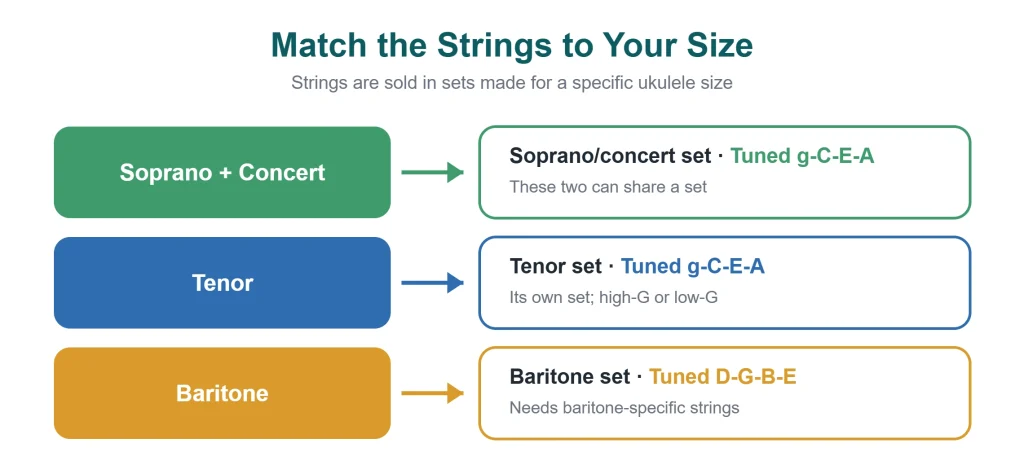
Strings are sold in sets made for specific ukulele sizes, and using the right set matters. Soprano and concert ukuleles can share a set, while tenor and baritone have their own. The baritone is strung for its D-G-B-E tuning rather than the standard G-C-E-A of the other sizes, so it needs baritone-specific strings. When buying, choose the set labeled for your size. If you are unsure which size you have, our comparison of soprano vs concert vs tenor ukuleles can help.
High-G or Low-G Sets
You will also see sets labeled high-G or low-G. High-G is the standard re-entrant tuning that gives the bright, classic ukulele sound, and it is what most beginners should use. Low-G sets include a thicker or wound fourth string tuned an octave lower for a fuller range, favored by some fingerstyle players. Both use the same note names.
Should Beginners Upgrade Their Strings?

It is one of the best-value upgrades you can make. Budget ukuleles tend to ship with cheap strings, and swapping them for a quality set of fluorocarbon or synthetic gut strings can improve the tone and tuning stability of an inexpensive instrument. Strings are affordable compared to the instrument itself, so if your ukulele sounds dull straight out of the box, fresh strings are a cheap and effective first step. Remember that any new strings need a week or two to settle, as explained in our guide on how to tune a ukulele.
Frequently Asked Questions
How often should I change my ukulele strings?
Regular players change strings every three to six months, while occasional players may need to once or twice a year. The best guide is the strings themselves: replace them when they sound dull, will not hold tune, look worn, or feel rough, and replace a broken string right away.
What are the best strings for a ukulele?
There is no single best type; it depends on the sound you want. Fluorocarbon strings are bright, clear, and tuning-stable, synthetic gut strings like Nylgut offer a warm classic tone, and nylon is affordable and mellow. Many players enjoy fluorocarbon or synthetic gut. Try different types to find your favorite.
Can I put guitar or steel strings on my ukulele?
No. Standard ukuleles are built for low-tension nylon-type strings, and the high tension of steel or guitar strings can warp the neck or damage the body. Use strings made for the ukulele in the correct size.
Do ukulele strings go bad if I don’t play?
Yes, but slower. Strings age through exposure to air, moisture, and handling oils, losing brightness even on an instrument that sits unplayed. A very old set is worth replacing regardless of use. Wiping the strings after playing helps them last longer.
Will new strings make a cheap ukulele sound better?
Often, yes. Budget ukuleles tend to come with low-quality strings, and upgrading to a good set of fluorocarbon or synthetic gut strings can improve the tone and tuning stability. It is an inexpensive and effective upgrade for a dull-sounding instrument.
Keep Your Ukulele Sounding Fresh
Changing your strings when they wear out is one of the simplest ways to keep your ukulele sounding its best. Watch for a dull tone, tuning trouble, and visible wear, choose the right type and size of string for your instrument and taste, and never fit steel strings to a standard ukulele. With fresh, well-chosen strings, even a modest ukulele can sing.
For more on keeping your instrument in top condition, see our guide on how to care for and store your ukulele, and if you are just getting started, our complete beginner’s guide to playing the ukulele covers everything from tuning to your first song.