
Singing while you strum is the moment the ukulele becomes magical. It’s also the point where many beginners get stuck, finding they can either play or sing, but not both at once. If that’s you, don’t worry.
This is one of the most common hurdles for new players, and the right approach makes it learnable. The steps below take you from playing and singing separately to doing both together.

Why It Feels So Hard at First
Singing and playing at the same time asks your brain to manage two different rhythms: the steady pattern of your strumming hand and the flowing rhythm of the melody and words. At first, this feels like patting your head while rubbing your stomach.
You don’t keep both fully conscious at once. Instead, you make one of them, your strumming, so automatic that it runs on autopilot, which frees your mind to focus on singing.
Step 1: Make Your Playing Automatic
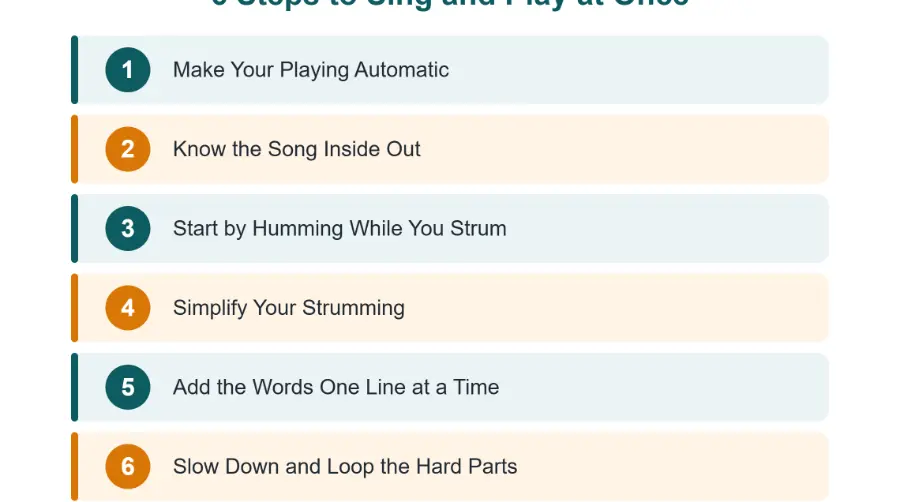
Before you add your voice, you need to be able to play the song’s chords and strumming pattern without thinking about them at all. This is the single most important step, and rushing it is the number one reason people struggle.
Practice the chord changes and strum until you can do them while looking away, holding a conversation, or watching television. If any part of your playing still needs conscious attention, your brain won’t have room to sing.
Get comfortable with the chords first using our easy ukulele chords for beginners, and lock in a simple rhythm with our guide to ukulele strumming patterns every beginner should know.
Step 2: Know the Song Inside Out
You also need to know the song itself well, separately from playing it. Sing it in the shower, in the car, anywhere, until the melody and words come effortlessly. If you have to think hard about how the tune goes or what comes next, you’ll overload yourself the moment you pick up the ukulele. When the playing and the singing are each solid, combining them becomes far less daunting, because you’re joining two things you already know rather than learning two at once.
Step 3: Start by Humming While You Strum
Humming is a gentle first bridge between the two skills. Keep strumming your steady pattern, but instead of singing words, hum the melody. Humming removes the challenge of remembering lyrics and lets you focus on fitting the tune over your strumming.
Once humming feels comfortable, you’re most of the way there. This small step often produces a real breakthrough, because it proves to your brain that the two rhythms can coexist.
Step 4: Simplify Your Strumming
When you first add words, make your playing as simple as possible. Drop any fancy pattern and go back to a single downstrum on each beat, or even one strum per chord. A basic strum gives your brain the breathing room to concentrate on singing.
It might sound plain, but it works, and it sounds far better than a complicated pattern that falls apart every time you open your mouth. Once you can sing over simple strumming with ease, you can reintroduce a fuller pattern, one small step at a time.
Step 5: Find Your Anchor Points
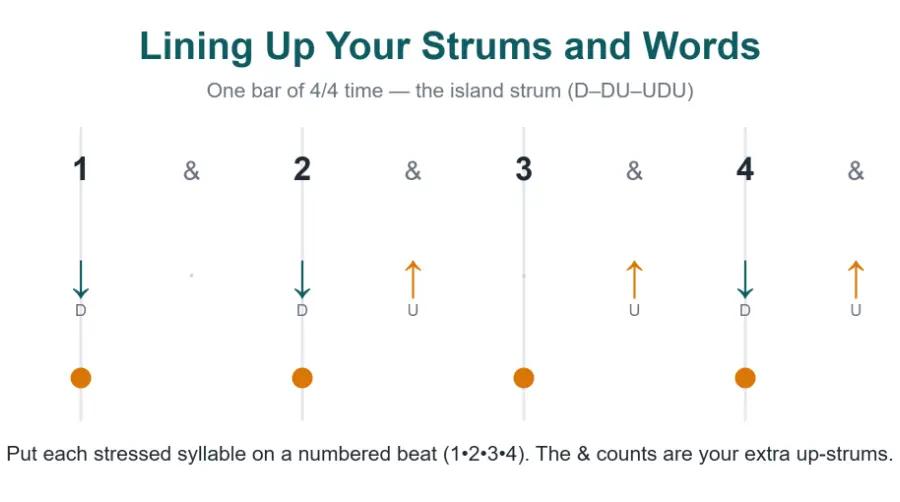
The trickiest part is lining up the words with the strums and chord changes. Identify anchor points, the specific moments where a particular word lands on a particular strum or where you change chords.
Notice which word you’re singing when each chord change happens, and practice those moments until they sync up. You don’t need to map out every beat; a few key anchors per line give your playing and singing something to lock onto, and the rest falls into place.
Step 6: Slow Down and Loop the Hard Parts
Play everything much slower than the real song at first. Slowing down gives your brain time to coordinate both tasks, and speed comes once the coordination is there.
If one line or transition keeps tripping you up, loop just that small section over and over rather than always starting from the top. Isolating the difficult moment and repeating it beats playing the whole song badly again and again. Be patient and let it come together.
Choosing the Right First Song
Your choice of song makes a huge difference. Pick something slow, with few chord changes and a melody that follows the beat, rather than a fast song with tricky, syncopated timing. Simple, familiar songs where the words fall on the beat are ideal for your first attempts. As your coordination improves, you can move on to songs with more chords and more complex rhythms. For good starting options, see our list of easy ukulele songs for beginners.
Common Pitfalls to Avoid
A few mistakes slow people down. The biggest is trying to sing before the playing is automatic, which overloads the brain every time. Another is speeding up the strumming or slowing it down whenever the singing gets busy, so keep your strumming hand steady and let it be the anchor.
Many beginners also choose songs that are too difficult too soon, then feel discouraged. Tension creeps in when you concentrate hard, so relax your shoulders, breathe, and remember it’s supposed to be fun. For more on habits that hold beginners back, see our guide to common ukulele beginner mistakes and how to fix them.
Bringing Voice and Strings Together

Learning to sing and play at the same time is less about talent and more about method. Make your playing automatic, know the song well, bridge the gap by humming, simplify your strumming, and line up a few anchor points, all while keeping a slow pace and staying relaxed.
Follow those steps and one day it will click, and you’ll be strumming and singing without a second thought. That’s when the ukulele stops being an exercise and becomes pure joy. For a broader foundation, revisit our complete beginner’s guide to playing the ukulele.
Frequently Asked Questions
Why can’t I sing and play ukulele at the same time?
Most often it’s because your playing still needs conscious attention. Until your strumming and chord changes are fully automatic, your brain has no spare capacity to sing. Practice the playing until you can do it without thinking, and singing becomes much easier to add.
How long does it take to learn to sing and play together?
It varies, but many beginners manage a simple song within a few weeks of steady practice. The timeline depends on how automatic your playing is, so time spent making your strumming effortless pays off.
Should I hum before I sing the words?
Yes, humming is a great intermediate step. It lets you fit the melody over your strumming without the added challenge of remembering lyrics, and it often produces a breakthrough before you add words.
What’s the best type of song to start with?
Choose a slow, familiar song with few chords and a melody that follows the beat. Avoid fast songs with tricky, off-beat timing until your coordination is stronger.
Should I simplify my strumming when I sing?
Absolutely. Start with a simple strum, even one downstroke per beat, so your brain can focus on singing. Once that feels comfortable, add back a fuller pattern.