
Every ukulele player makes the same handful of mistakes when starting out. Each one has a simple fix, and knowing them in advance can save you weeks of frustration. This guide walks through the most common beginner mistakes, from buzzing strings and awkward posture to practice habits that hold you back, and shows you how to correct each one.
If you catch yourself making several of these, do not worry. They are a normal part of learning, and fixing them is what separates a fast-improving beginner from a stuck one.
Setup and Tuning Mistakes
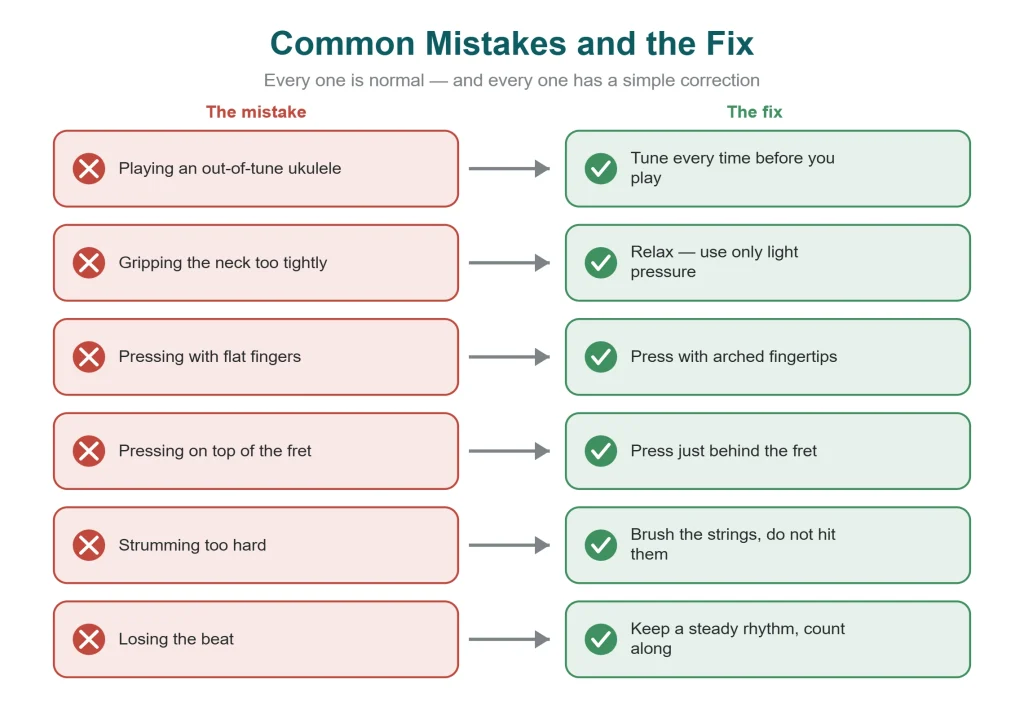
Playing an Out-of-Tune Ukulele
This is the number one mistake, and the most damaging. Practicing on an out-of-tune instrument makes even perfect playing sound wrong, discourages you, and trains your ear to accept wrong pitches.
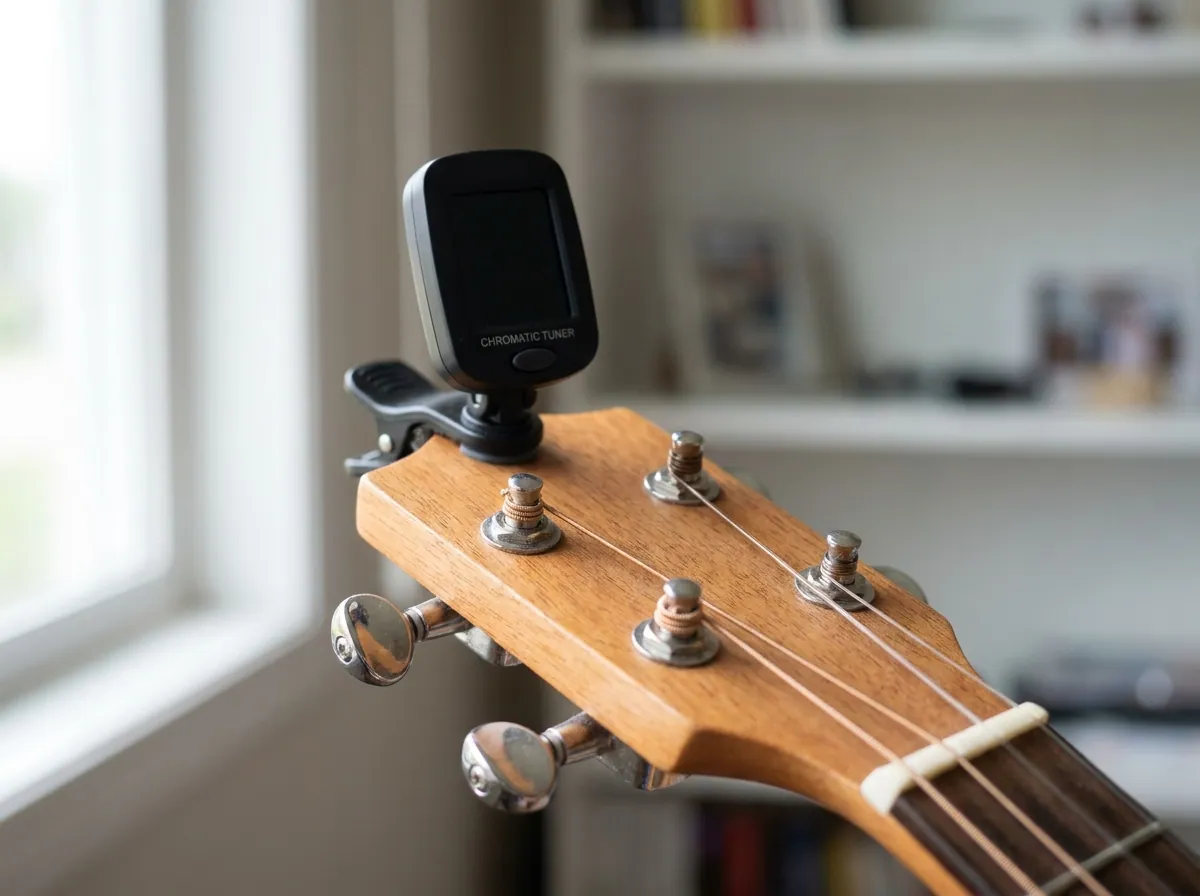
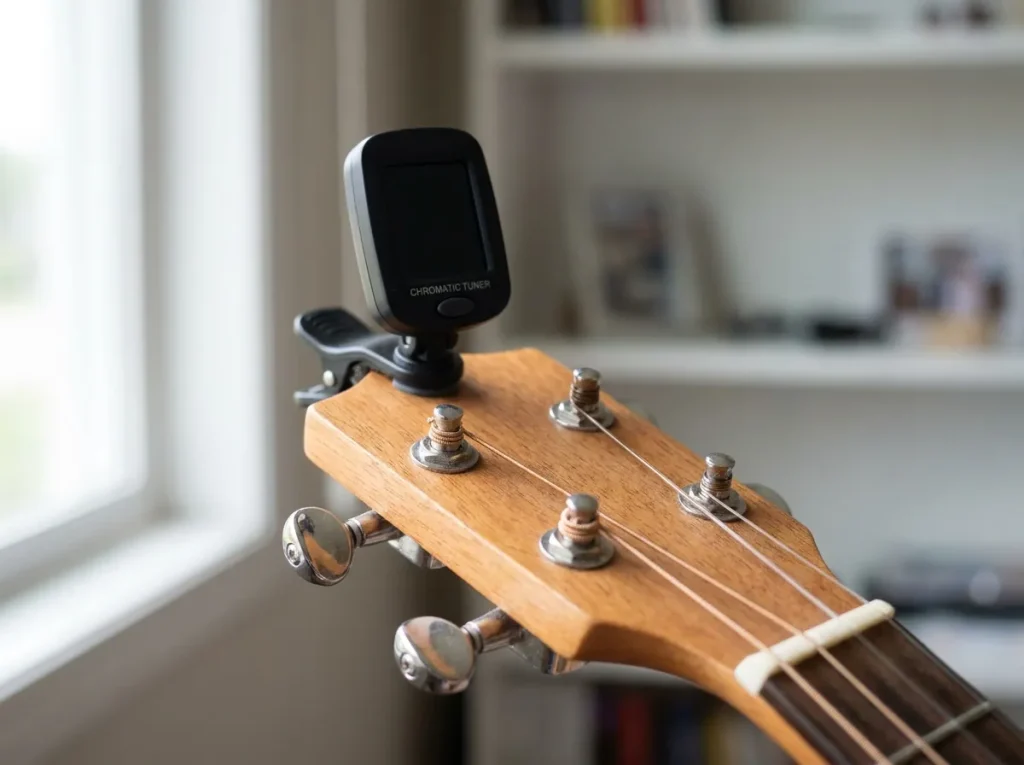
The fix: tune every single time before you play, with a clip-on tuner or a phone app. If you are unsure how, our guide on how to tune a ukulele walks through the standard G-C-E-A tuning step by step.
Not Letting New Strings Settle
Beginners panic when a brand-new ukulele will not stay in tune. This is normal. Fresh nylon strings stretch and keep going flat for the first week or two. The fix is patience: retune whenever you need to, and stretch each string with your fingers after tuning to speed the process. Within a couple of weeks the strings settle and hold their pitch.
Starting on a Very Cheap Instrument
The cheapest toy ukuleles are almost impossible to keep in tune, which makes learning harder than it needs to be. You do not need an expensive instrument, but a modest beginner ukulele that holds its tuning is worth the small extra cost. If you are still choosing, our guide to the types of ukuleles can help you pick the right size.
Holding and Posture Mistakes
Gripping the Neck Too Tightly
A tense, white-knuckle grip on the neck is one of the most common causes of slow, clumsy chord changes and quick hand fatigue. The fix is to relax your hand. Let the neck rest in the valley between your thumb and index finger, thumb on the back, and use only as much pressure as you need to make the notes ring clear.
Supporting the Ukulele with Your Fretting Hand
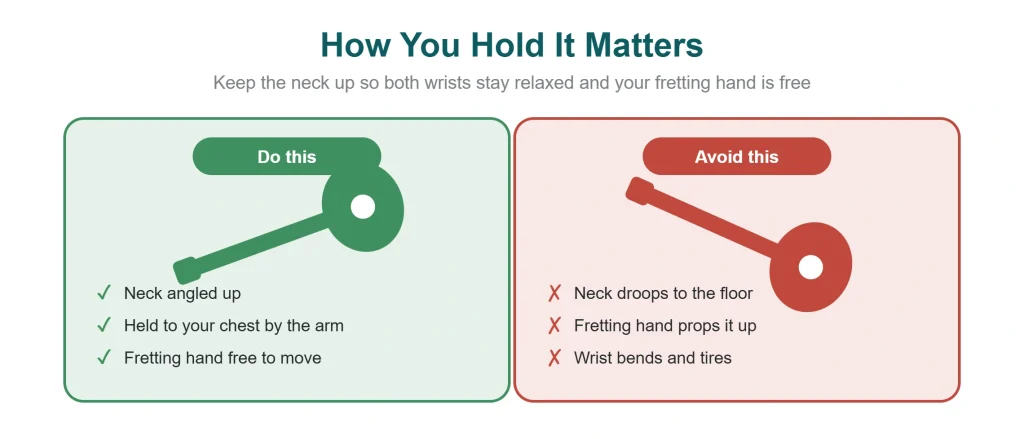
If your fretting hand is busy holding the instrument up, your fingers cannot move to form chords. The fix is to let your strumming forearm hold the ukulele against your chest, so your fretting hand does nothing but play. Our guide on how to hold a ukulele and strum covers the position in detail.
Letting the Neck Droop Down
When the neck points down toward the floor, your fretting wrist has to bend at an awkward angle, which tires the hand and strains it. The fix is to angle the neck a little upward and keep the ukulele high on your chest, so both wrists stay relaxed and natural.
Fretting-Hand Mistakes
Pressing with the Flat of Your Finger
Pressing strings with the flat pads of your fingers makes them touch and mute neighboring strings. The fix is to press with the tips of your fingers and keep them arched, like little arches standing over the strings, so each one presses only its own string.
Pressing on Top of the Fret
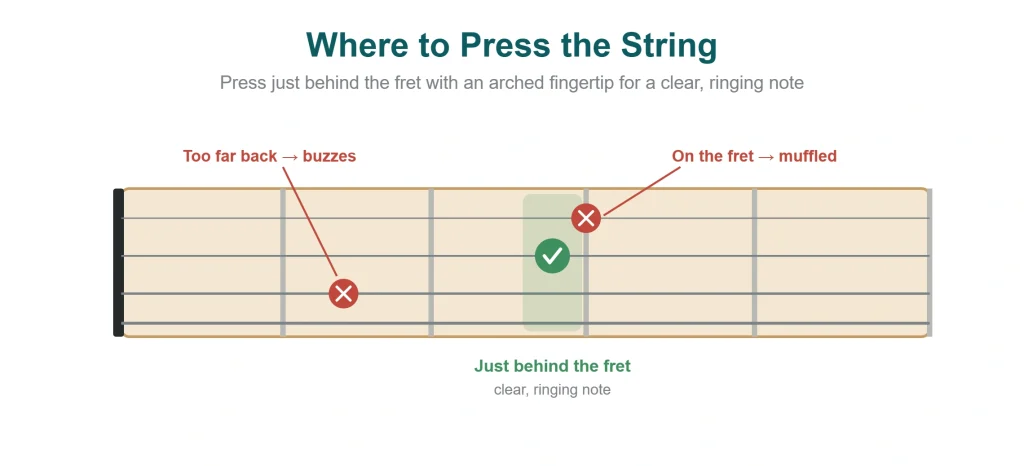
Placing your finger on the metal fret bar produces a muffled or dead note. The fix is to press just behind the fret, in the space between the metal bars closer to the body, which gives a clear, ringing note with the least effort.
Pressing Too Hard or Too Softly
Press too soft and the strings buzz; press too hard and you tire your hand and pull notes out of tune. The fix is the middle ground: press firm enough that the note rings clean, then ease off until you find the lightest touch that still sounds clear.
Long Fingernails on the Fretting Hand
Long nails on your fretting hand stop your fingertips from pressing the strings down and cause buzzing. The fix is to keep the nails on your fretting hand trimmed short. Many players leave the nails on their strumming hand a bit longer for a brighter strum, but the fretting hand should be short.
Strumming Mistakes
Strumming Too Hard
Beginners almost always strum too hard, which sounds harsh and tires the hand. The fix is to think of strumming as brushing the strings, not hitting them. A light touch produces a warmer, more pleasant tone.
Strumming from a Stiff Arm
Moving your whole rigid forearm to strum is tiring and produces an uneven sound. The fix is to let the motion come from a loose, relaxed wrist, as if you were shaking water from your fingertips.
Losing the Beat
Speeding up, slowing down, or stopping mid-song makes even correct chords sound off. The fix is to keep a steady rhythm above all else. Tap your foot or count out loud, and if a chord change lags, keep strumming in time and catch up rather than stopping. Steady timing is what makes playing sound like real music.
Chord-Change Mistakes
Stopping to Fix Every Chord
Pausing to perfect each chord shape before strumming breaks your rhythm and builds a stop-start habit. The fix is to keep the rhythm going even if a chord is not perfect. Clean chords come with repetition, but you have to practice good timing from the start.
Not Practicing Changes on Their Own
Only ever practicing full songs means your trickiest chord changes never get focused attention. The fix is to isolate them: pick two chords and switch back and forth at a slow pace for a minute, then try to make more clean changes than you did the day before. This targeted practice speeds up your changes.
Giving Up on Hard Chords
Many beginners abandon chords like F or G because they feel impossible at first. The fix is to persist. These shapes feel awkward for about a week and then click for almost everyone. If you need the exact finger positions, our guide to easy ukulele chords for beginners breaks them down.
Practice Habit Mistakes
Practicing Rarely but for a Long Time
One long weekly session builds skill much slower than short daily ones, and it leaves your fingertips sore. The fix is to practice a little every day, even just ten to fifteen focused minutes. Regular repetition builds the muscle memory that makes playing feel automatic.
Only Playing What You Already Know
It is comfortable to play the same song or chord over and over, but it stalls your progress. The fix is to spend part of each session on something just beyond your current ability, whether a new chord, a faster change, or a new strumming pattern, then reward yourself by playing something fun.
Expecting Too Much Too Soon
Getting discouraged because you are not playing well within a few days is a common reason people quit. The fix is to set realistic expectations: sore fingertips, fumbled changes, and buzzing strings are all normal early on and fade with steady practice. Progress on the ukulele is fast if you stick with it.
Quick Guide: Why Is My Ukulele Buzzing?
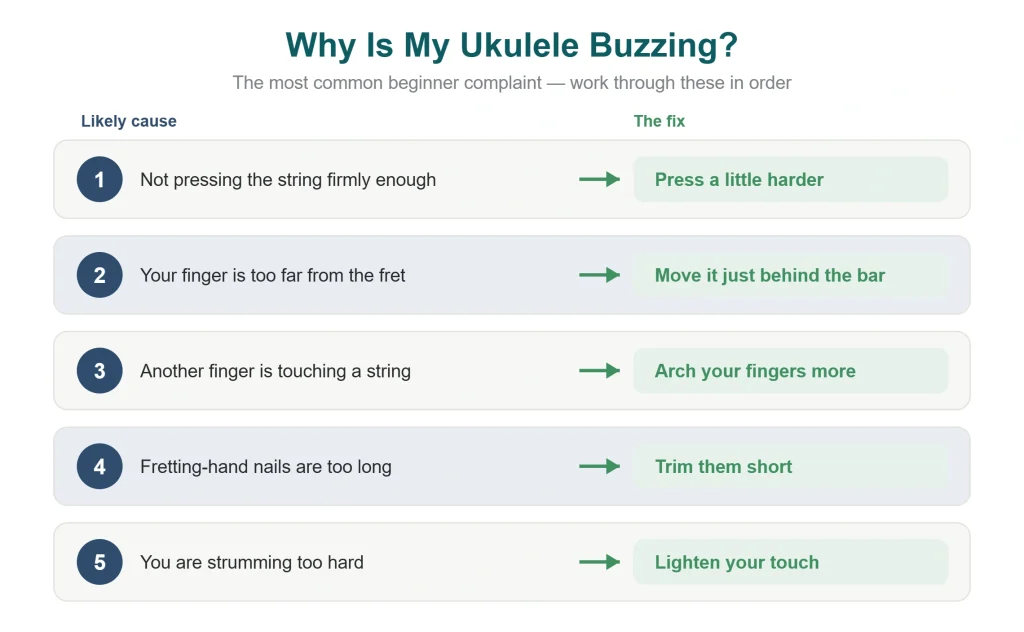
String buzz is the single most common complaint from beginners, and it almost always comes down to one of these causes. Work through them in order:
- You are not pressing the string firmly enough. Press a little harder.
- Your finger is too far from the fret. Move it closer, just behind the metal bar.
- Another finger is touching a string it should not. Arch your fingers more.
- Your fretting nails are too long. Trim them short.
- You are strumming too hard. Lighten your touch.
Keep Going
Every one of these mistakes is a normal part of learning, and every one has an easy fix. Tune up every time, stay relaxed, press with your fingertips just behind the frets, keep a steady rhythm, and practice a little each day. Correct these habits early and your progress on the ukulele will be smooth and enjoyable.
For a full start-to-finish walkthrough, see our complete beginner’s guide to playing the ukulele.
Frequently Asked Questions
Why do my ukulele strings buzz?
Buzzing means you are not pressing the string firmly enough, your finger is too far from the fret, or another finger is touching the string. Long fretting-hand nails and hard strumming can also cause it. Press just behind the fret with firm fingertips and arched fingers to fix most buzzing.
How hard should I press the strings?
Press just firmly enough that the note rings clear, then ease off to the lightest touch that still sounds clean. Pressing too hard tires your hand and can pull the note sharp, while pressing too soft causes buzzing.
How long does it take to stop making these mistakes?
Most beginners iron out the major mistakes within a few weeks of regular, short daily practice. Awkward chords like F and G click after about a week for most people, and buzzing and posture issues fade as your hands build muscle memory.
Is it normal for my fingertips to hurt?
Yes. Mild fingertip soreness is normal in the first week or two as your fingertips toughen up. Ukulele strings are soft nylon, so the soreness is much milder than on a steel-string guitar and passes fast.
What is the biggest mistake beginners make?
Playing an out-of-tune ukulele is the most damaging mistake, because it makes everything sound wrong and can be discouraging. Always tune before you play. The second biggest is practicing rarely instead of a little every day.