
Imagine a ukulele that could cut through a noisy music hall, a marching band, or a crackly early radio broadcast without any amplification at all. That instrument exists, and it is called the banjolele.
Part ukulele, part banjo, this bright, punchy little hybrid was one of the defining sounds of the 1920s and 1930s, and it remains a charming curiosity today.
What Exactly Is a Banjolele?
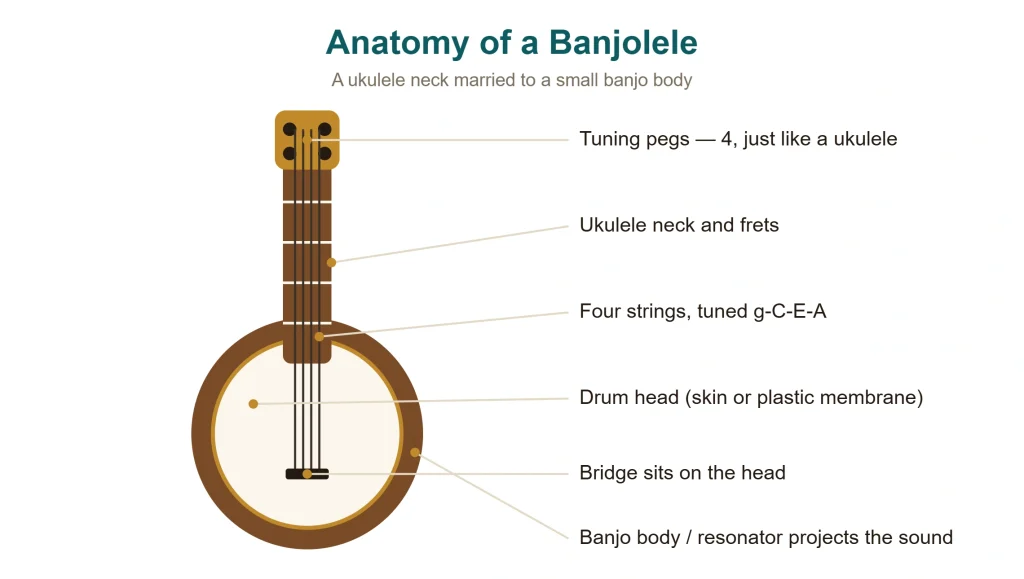
A banjolele, also written as banjo ukulele or banjo uke, is a hybrid instrument that combines the neck of a ukulele with the body of a banjo. From the player’s point of view it is a ukulele: it has four strings, uses the same standard G-C-E-A tuning, and takes the same chords and techniques.
But instead of a hollow wooden soundbox, it has a small banjo-style body, a circular frame with a taut drum head, or membrane, stretched across it.
That drum head is the secret to its sound. When you strum, the vibration drives the head like a tiny drum, producing a loud, bright, sharp, percussive tone that projects far more than a wooden ukulele. If you can play the ukulele, you can play the banjolele, but it will be a great deal louder.
Why Is It So Loud?
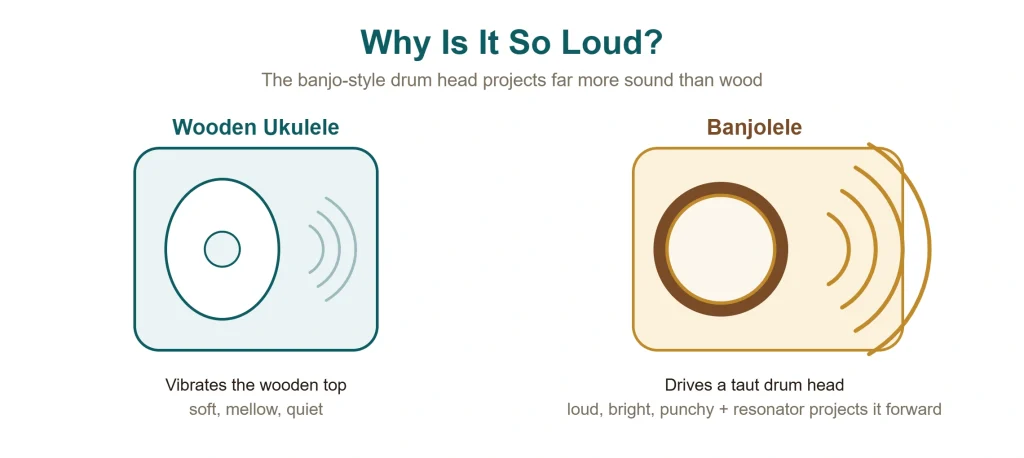
The banjolele’s volume comes from its banjo-inspired construction. A traditional ukulele produces sound when the strings vibrate the wooden top and the air inside the body, which is pleasant but quiet.
A banjolele instead transfers that string vibration into a taut head, historically made of animal skin or vellum and today a synthetic material like plastic. This membrane reacts fast, pushing out far more volume.
Many banjoleles also have a resonator, a bowl-shaped back that reflects the sound forward toward the audience, making them louder still. Open-back models are a little mellower and quieter, while resonator models are the true loudest of the little ukuleles.
The Origins of the Banjolele
The banjolele emerged in the early twentieth century, during the first great wave of ukulele popularity. Most accounts credit the brothers Alvin D. Keech and Kelvin Keech, who developed the instrument around 1917 and who popularized and trademarked the name “Banjulele.”
As with many hybrid instruments, the precise origins are a little murky and other makers experimented with similar ideas, but the Keech name became tied to the instrument’s early success.
The timing was perfect. The ukulele was booming in popularity, and musicians loved its easy chords and cheerful character but wished it were louder. The banjolele answered that wish, marrying the friendly ukulele neck to a body that could hold its own on a crowded stage.
The Right Instrument for Its Time
The banjolele became popular in the 1920s and 1930s, an era before electrical amplification was widespread. Performers in music halls, vaudeville theaters, dance bands, and early radio and recording studios needed instruments the audience could hear without microphones and speakers.
A quiet wooden ukulele got lost in the mix, but a banjolele cut right through. This made it a favorite of entertainers who needed volume and presence, and its bright, jaunty tone suited the upbeat, jazzy music of the age. For a couple of decades, the banjolele was everywhere in popular entertainment.
George Formby and the Golden Age
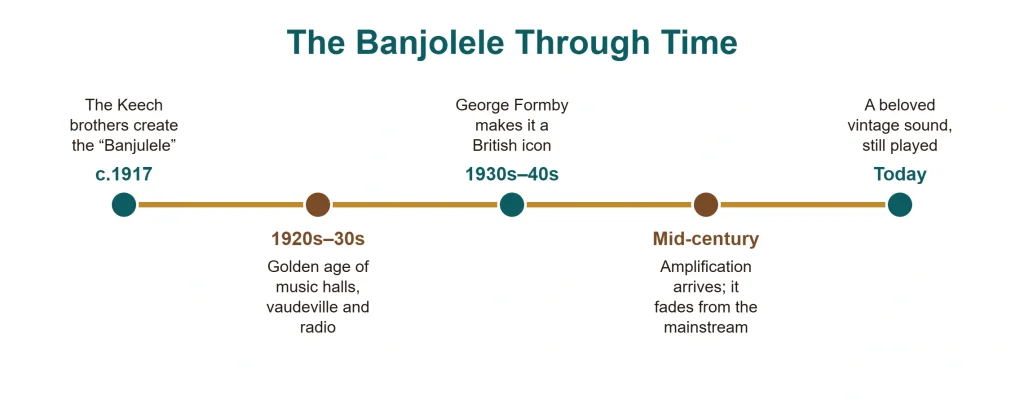
One name sits above all others in the banjolele’s story: George Formby, the British comedian, singer, and film star who became one of the most popular entertainers in Britain during the 1930s and 1940s.
Formby played the banjolele in his cheeky, comic songs, including favorites like “When I’m Cleaning Windows” and “Leaning on a Lamp-post,” and his rapid, syncopated strumming style, known as the “split stroke,” became legendary.
Formby’s enormous fame turned the banjolele into an icon of British popular culture, and his influence still inspires devoted enthusiasts and appreciation societies today. He is one of the key figures in the wider story of the instrument, which you can explore in our guide to famous ukulele players who shaped the instrument.
How the Banjolele Is Played
For anyone who already plays the ukulele, the banjolele holds no surprises in terms of fingering. It uses the same standard G-C-E-A tuning and the same chord shapes, so your existing knowledge transfers.
The feel and the sound differ. The louder, sharper tone rewards crisp, rhythmic strumming, which is why fast, percussive techniques like Formby’s flourished on it. Because of the drum head, banjoleles are also a little heavier and can feel different to hold than a light wooden ukulele.
Decline and Enduring Legacy
The banjolele’s great advantage, its volume, became less essential over time. As electrical amplification and microphones became standard through the mid-twentieth century, performers no longer needed an instrument that was loud by design; a microphone could now lift even a quiet ukulele to fill a hall. Combined with the natural rise and fall of the ukulele’s popularity over the decades, the banjolele slipped from the mainstream.
Yet it never disappeared. The instrument retained a devoted following, kept alive in part by the enduring love for George Formby and by musicians in traditional jazz, folk, and novelty music who prize its distinctive punch. Its bright, unmistakable voice still appears wherever players want that vintage, cutting sound.
The Banjolele Today
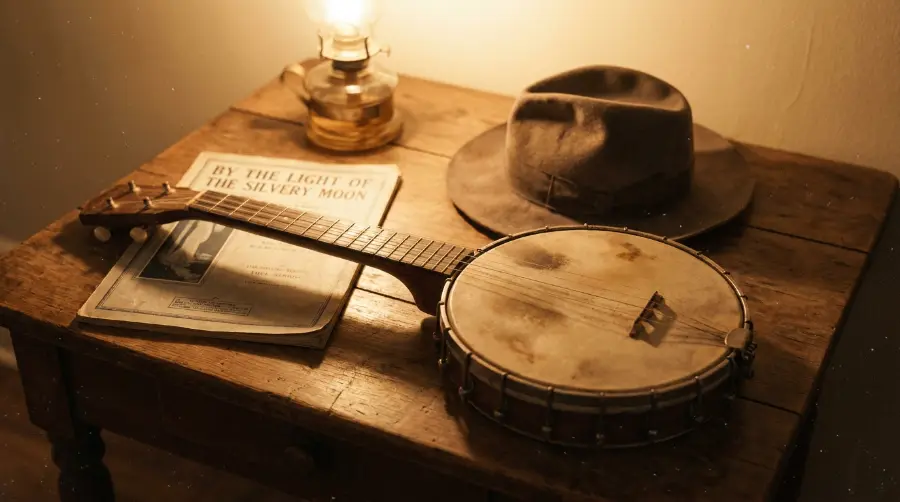
You can still buy banjoleles today, from affordable models to finely crafted instruments. They remain a wonderful choice for players who want something with more volume and personality than a standard ukulele, whether for busking, playing in a group without amplification, or enjoying that classic vintage tone.
For a beginner, the key thing to know is that you play it just like a ukulele, so the skills you build on a regular uke carry over. Think of it as a characterful cousin rather than a starting instrument, but it is great fun once you know the basics.
A Little Instrument With a Big Voice
The banjolele is a delightful chapter in the ukulele’s story: an ingenious answer to the wish for more volume, born in an age before amplification. George Formby, one of Britain’s best-loved entertainers, made it immortal. Loud, bright, and full of character, it shows that even a small instrument can make a big noise.
To learn how it fits among the wider ukulele family, see our guide to the types of ukuleles, explore the full history of the ukulele, or start playing with our complete beginner’s guide to playing the ukulele.
Frequently Asked Questions
What is a banjolele?
A banjolele is a hybrid instrument combining a ukulele neck with a small banjo body. It has four strings and uses standard ukulele tuning and chords, but its drum-like head gives it a much louder, brighter, and more percussive tone than a wooden ukulele.
Is a banjolele played like a ukulele?
Yes. A banjolele uses the same standard G-C-E-A tuning and the same chord shapes as a ukulele, so if you can play one, you can play the other. The main differences are its louder, sharper sound and its heavier body.
Why is a banjolele so loud?
Its volume comes from its banjo-style body, where a taut drum head amplifies the strings’ vibration far more than a wooden soundbox. Many banjoleles also have a resonator back that projects the sound forward, making them louder still.
Who is the most famous banjolele player?
The British entertainer George Formby is the most famous banjolele player. His comic songs and rapid strumming style made him a huge star in Britain in the 1930s and 1940s and turned the banjolele into a cultural icon whose fans still celebrate it today.
Is a banjolele good for beginners?
Because it plays like a ukulele, a beginner can learn on one, though most people start on a standard ukulele and add a banjolele later for its unique sound. The skills transfer, so it is more of a characterful option than a typical first instrument.