
One of the first questions every new player asks: how much should I spend on a ukulele? Spend too little and you risk a frustrating toy that will not stay in tune; spend too much and you may pay for quality a beginner cannot yet use. This guide breaks down what you get at each price level, what the extras cost, and where the sweet spot lies, so you can set a smart budget with confidence.
The prices below are approximate and given in US dollars. Ukulele prices vary by country, brand, and over time, so treat these as general guidance rather than exact figures and check current local prices before buying.
The Short Answer
For most beginners, the sweet spot is roughly $50 to $100 for the ukulele itself. In this range you can find a well-built instrument from a reputable brand that stays in tune, feels comfortable, and sounds pleasant, everything you need to learn without the frustrations of cheaper instruments. If that is all you came for, you have your answer.
Ukulele Price Tiers Explained
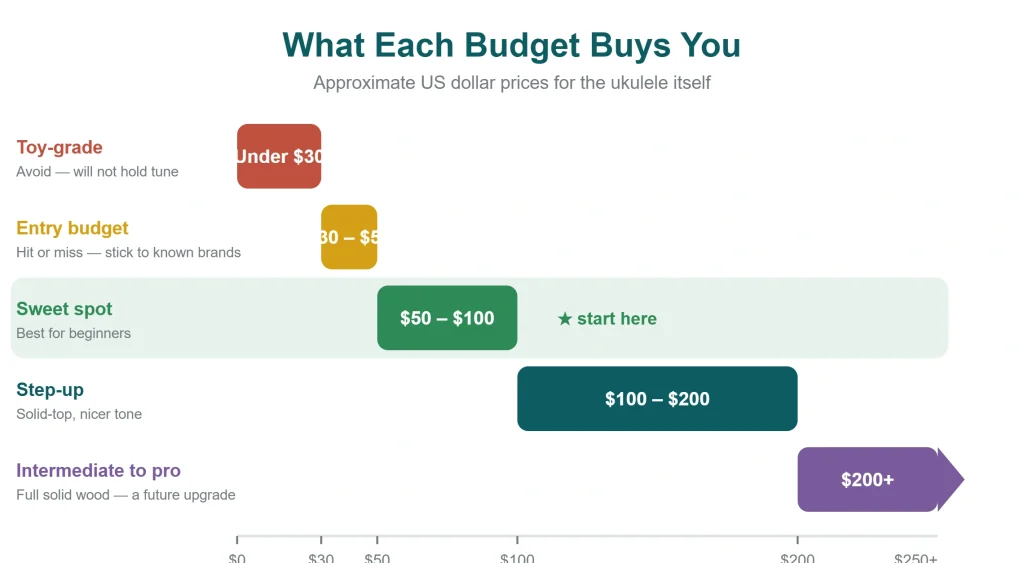
Each budget range buys a different level of instrument.
Under $30: Toy-Grade
At this level you are looking at toy or novelty instruments. They tend to have poor tuners that will not hold pitch, rough setups, and inconsistent build quality. They might look like a bargain, but they make learning harder, and you should avoid them if you are serious about playing. They can be acceptable as a disposable gift or party item, but not as a real learning instrument.
$30 to $50: Entry Budget
This range is hit or miss. A few reputable brands offer decent, playable beginner ukuleles here, especially in a bundle, but quality varies a lot. If you buy in this bracket, stick to well-reviewed models from established makers rather than unknown brands.
It can work on a tight budget, but you are close to the point where a little more money buys a much better instrument.
$50 to $100: The Beginner Sweet Spot
This is where most beginners should aim. Ukuleles here are solidly built, hold their tuning thanks to decent geared tuners, and produce a satisfying tone. Many are laminate, which is good for learning, and some bundles in this range include a tuner and gig bag. An instrument at this level removes the frustrations that make beginners quit, which is why teachers point new players here.
$100 to $200: The Step-Up
Spend in this range and you start to see better materials, a solid-wood top in many cases, nicer finishes, and more refined tone. This is a great choice if you already know you are committed, or if you want an instrument that will keep satisfying you as your skills grow. It is more than a beginner needs, but it is money well spent for a keen learner.
$200 and Up: Intermediate to Professional
Above $200 you move into intermediate and professional instruments, many made of full solid wood such as koa or mahogany, with excellent craftsmanship and rich tone that can improve with age. These are wonderful instruments, but a complete beginner will not get the full value from them yet. Consider this tier a future upgrade rather than a first purchase.
Why the Cheapest Ukuleles Cost You More
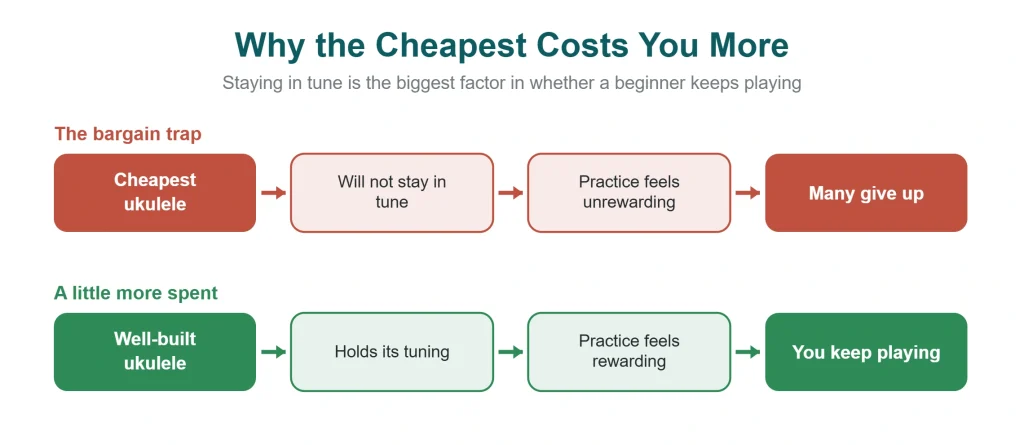
It is tempting to grab the cheapest ukulele you can find, but that tends to backfire. The most common problem with very cheap instruments is that they will not stay in tune, which is the single most discouraging thing for a beginner.
An instrument that sounds wrong no matter what you do makes practice unrewarding, and many people give up believing they “can’t play.” Spending a little more on something that holds its tuning is the best investment you can make in sticking with the instrument.
How Price Varies by Size and Material
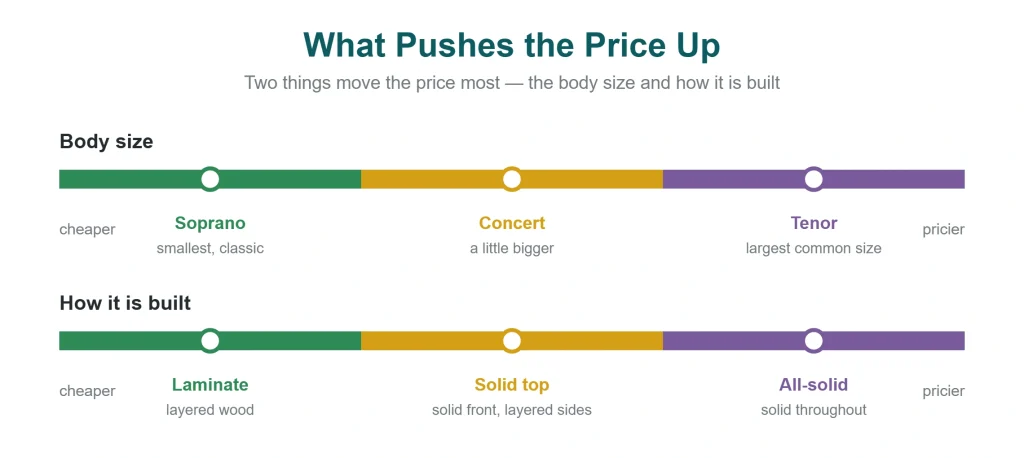
Two factors nudge the price within any tier: the size of the ukulele and what it is made of.
By size, sopranos are the most affordable, with concert and tenor costing a little more as they get larger. The differences stay modest at the beginner level. If you are unsure which size suits you, our comparison of soprano vs concert vs tenor ukuleles can help you decide.
By material, laminate ukuleles are the most budget-friendly, solid-top instruments cost more, and full solid-wood ukuleles are the most expensive. For a first instrument, laminate is fine and keeps you in the beginner sweet spot. Our guide to the best ukulele woods explains how the materials affect both tone and price.
Don’t Forget the Accessories
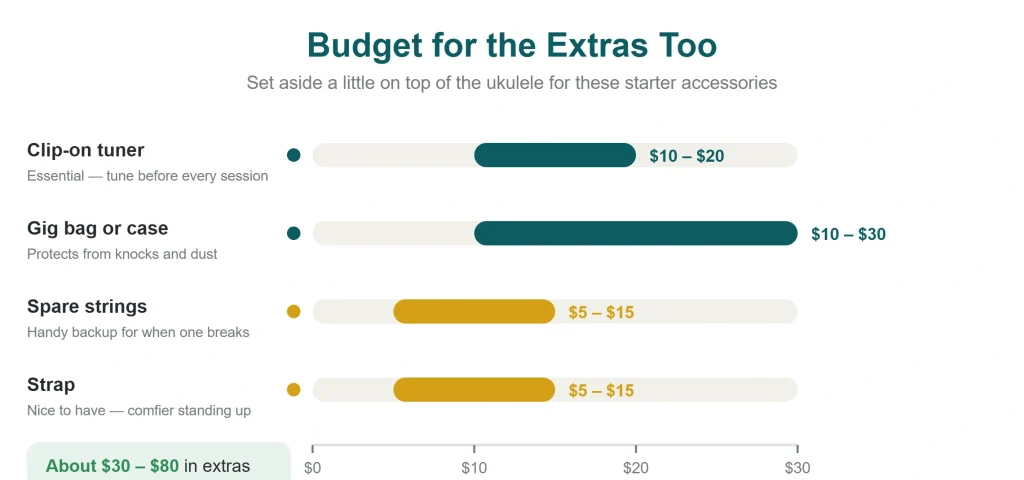
The ukulele itself is not the only cost. A few inexpensive extras make a real difference, and it helps to budget for them:
- Clip-on tuner (about $10 to $20) — essential for keeping your instrument in tune, unless you use a free phone app.
- Gig bag (about $10 to $30) — protects the instrument during storage and transport.
- Strap (about $5 to $15) — optional but helpful for holding the ukulele.
- Spare strings (about $5 to $15) — handy to have in case one breaks.
Because these add up, many beginners choose a bundle that packages the ukulele with a tuner, bag, and other extras, which is better value than buying everything separately. Just make sure the ukulele inside the bundle is from a reputable maker, not just padded out with cheap accessories.
Should a Beginner Buy an Expensive Ukulele?
Usually not. A complete beginner does not need an expensive instrument, because the subtle qualities that justify a high price, such as premium tonewoods and refined craftsmanship, are hard to appreciate and use in the early stages.
A reliable instrument in the $50 to $100 range serves a beginner just as well for learning. If you are confident you will stick with it, or you want something beautiful to inspire you, spending a little more is a valid choice. Price above the sweet spot buys refinement, not ease of learning.
Is a Used Ukulele Good Value?
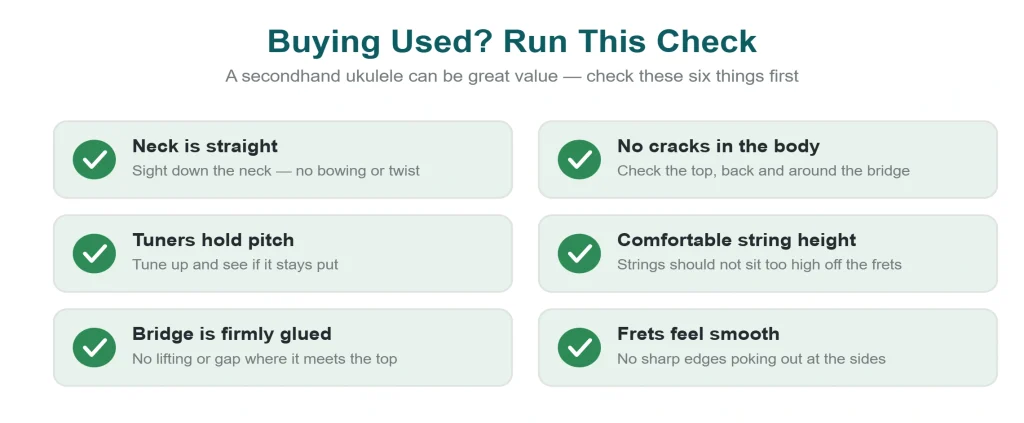
A used ukulele can stretch your budget and get you a higher-quality instrument for the price of a new beginner one. If you buy secondhand, check that the neck is straight, the body has no cracks, the tuners hold, and the strings sit at a comfortable height. If you are not confident judging condition, buying new from a trusted brand removes the risk and comes with a warranty.
Setting Your Budget
Aim for roughly $50 to $100 for a reliable beginner ukulele, avoid the toy-grade instruments under $30, and budget a little extra for a tuner and a gig bag. Spend more only if you are committed or want a nicer instrument to inspire you, and remember that a well-built, in-tune ukulele matters much more to your progress than a high price tag.
For the complete buying decision, including size, wood, and tuners alongside price, see our beginner’s buyer’s guide to choosing your first ukulele. And once yours arrives, our complete beginner’s guide to playing the ukulele will get you strumming your first song.
Frequently Asked Questions
How much should a beginner spend on a ukulele?
Around $50 to $100 is the ideal range for a beginner ukulele. In this bracket you get a solidly built instrument that holds its tuning and sounds pleasant, without paying for refinements a new player cannot yet use. Add a little more for a tuner and gig bag if they are not included.
Are cheap ukuleles worth it?
Very cheap ukuleles under about $30 are not worth it for most players, because they will not stay in tune and can make learning frustrating. It is better to spend a little more on an instrument that holds its tuning, which is the biggest factor in whether a beginner sticks with playing.
Do I need to buy accessories too?
At minimum you need a way to tune, either an inexpensive clip-on tuner or a free phone app. A gig bag to protect the instrument is worth having, and a strap and spare strings are useful extras. Buying a bundle that includes these is cheaper than purchasing them separately.
Is it worth buying an expensive ukulele as a beginner?
Not for most players. A reliable $50 to $100 ukulele is enough to learn on. Expensive instruments offer refined tone and premium woods that are hard to appreciate as a beginner. If you are committed or want something inspiring, spending more is fine, but it is not required to learn.
Why do ukulele prices vary so much?
Prices vary with the materials (laminate versus solid wood, and the type of tonewood), the quality of the tuners and craftsmanship, the brand, and the size. Premium woods like koa and finer construction push prices up, while affordable laminate instruments keep them low.