
Buying your first ukulele is exciting, but the sheer number of sizes, woods, and price tags can make it confusing. Choosing a great beginner instrument comes down to a few clear decisions.
This guide walks you through each one, size, budget, materials, tuners, and bundles, so you can buy the right ukulele with confidence and avoid the cheap traps that make learning harder.
Work through these steps in order and you will end up with an instrument that stays in tune, feels comfortable, and sounds good enough to keep you motivated.
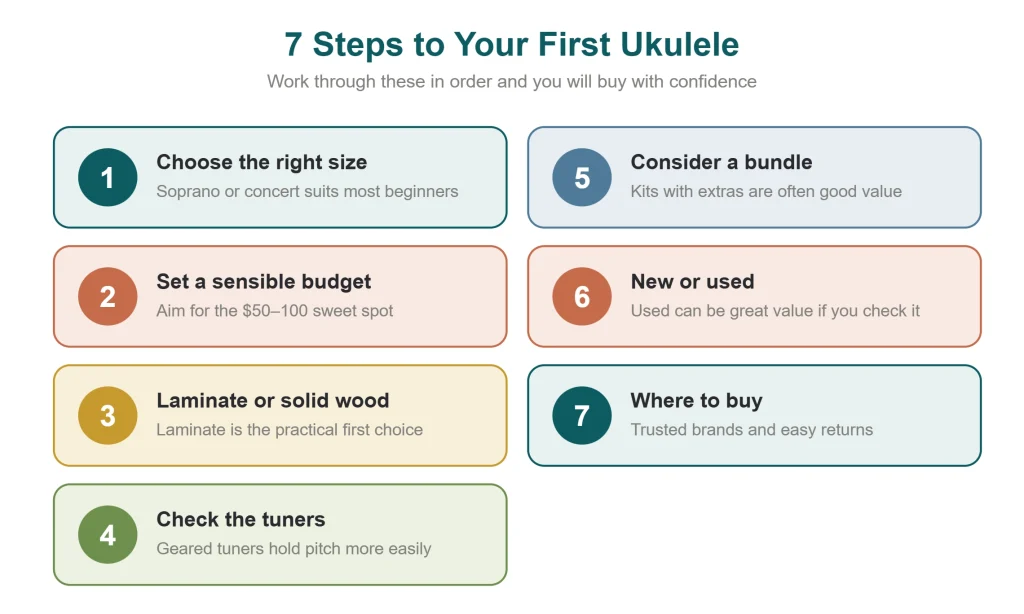
Step 1: Choose the Right Size
Ukuleles come in four main sizes, and this is the first and most important choice. All of them except the baritone use the same standard G-C-E-A tuning, so the chords you learn transfer between them.
- Soprano (about 21 inches) — the classic, smallest size with the bright, traditional “plinky” ukulele sound. Great for smaller hands and for that quintessential tone.
- Concert (about 23 inches) — a bit larger, with more room between frets and a fuller tone. This is one of the most popular all-round choices for beginners.
- Tenor (about 26 inches) — larger still, with even more finger room and a rich, resonant sound. A favorite of many performers and a good pick for larger hands.
- Baritone (about 30 inches) — the biggest, with a deep, mellow tone. Note that it uses a different tuning, D-G-B-E, like the top four strings of a guitar.
For most beginners, a concert or soprano is the sweet spot. Choose soprano for the classic sound and compact feel, or concert if you want a little more finger room. If you have large hands, a tenor may feel most comfortable. For a deeper comparison of tone and playability, see our full guide to the types of ukuleles.
Step 2: Set a Sensible Budget
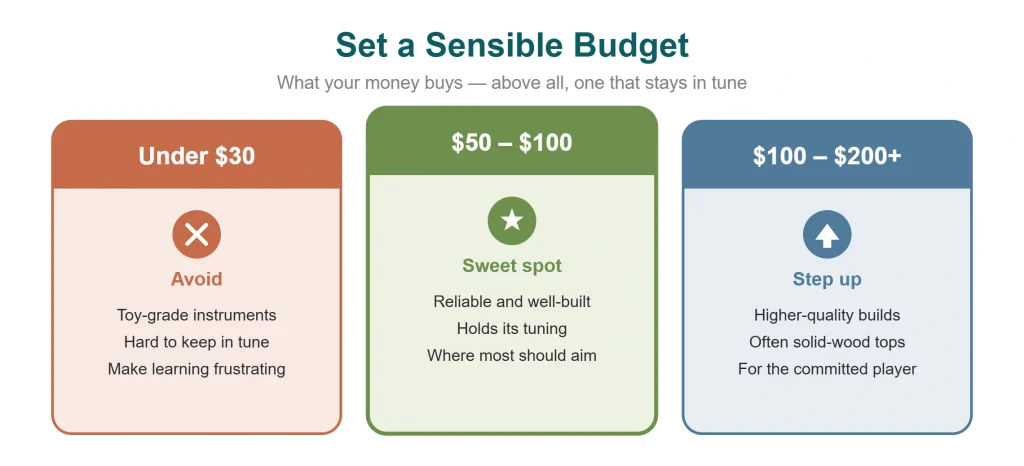
You do not need to spend a lot, but the very cheapest ukuleles are a false economy. Different price ranges get you different things:
- Under about $30: toy-grade instruments that are hard to keep in tune and can make learning frustrating. Best avoided.
- Around $50 to $100: the beginner sweet spot. In this range you can find a reliable, well-built ukulele that holds its tuning and sounds pleasant. This is what most new players should aim for.
- $100 to $200 and up: higher-quality instruments, often with solid-wood tops and better hardware. A great choice if you already know you are committed.
The most important thing your money buys at the beginner level is an instrument that stays in tune. A ukulele that keeps drifting out of tune is the fastest way to give up, so prioritize reliability over looks.
Step 3: Laminate or Solid Wood?
Makers build ukuleles from either laminate wood (thin layers pressed together) or solid wood (single pieces). Each has its place.
Laminate ukuleles are more affordable, more durable, and less sensitive to changes in humidity, which makes them a practical choice for a first instrument.
Solid-wood ukuleles sound richer and more resonant, and many improve in tone as they age, but they cost more and need a little more care. For a first ukulele, a good laminate instrument is fine, and you can upgrade to solid wood later once you know you love playing.
Step 4: Check the Tuners
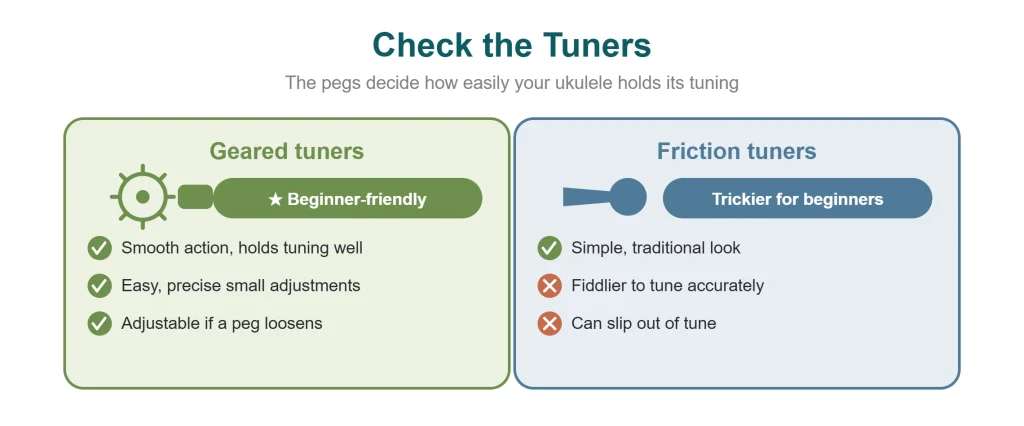
The tuning pegs matter more than beginners expect, because they determine how easily the instrument holds its tuning. There are two main types.
- Geared tuners have a smooth action and hold tuning well, which makes small adjustments easy. On many of them, you can tighten a small screw at the end of the knob if a peg becomes loose.
- Friction tuners are simpler pegs that rely on friction to stay put. They can look more traditional but are fiddlier to keep in tune, which can frustrate beginners.
For your first ukulele, geared tuners are the friendlier choice. Whichever you get, remember that new strings take a week or two to settle, as our guide on how to tune a ukulele explains.
Step 5: Consider a Beginner Bundle
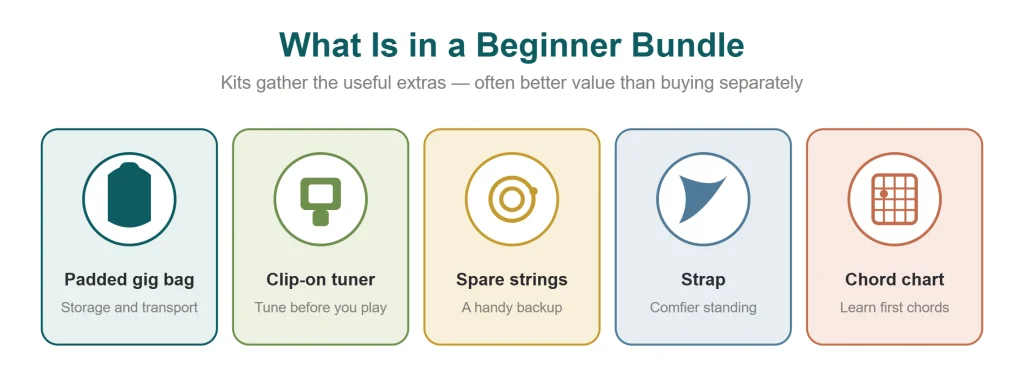
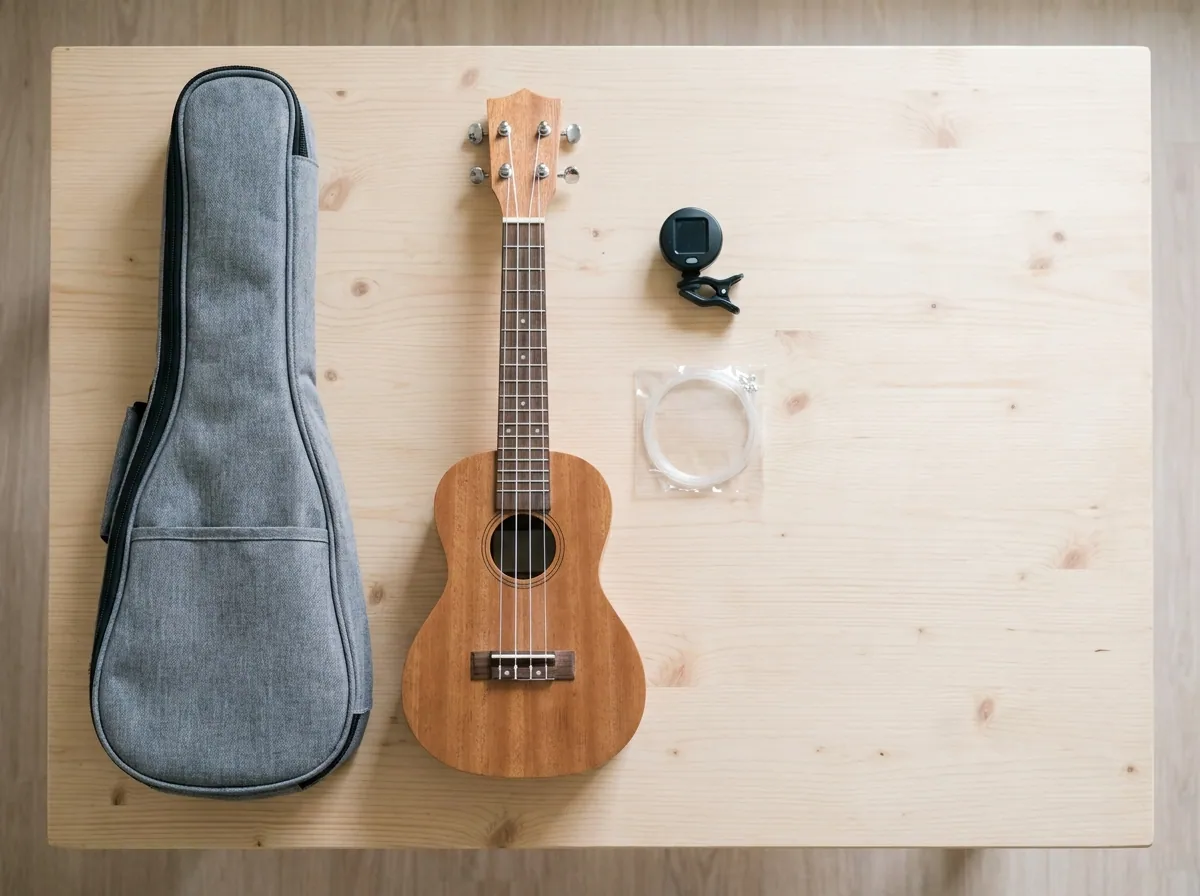
Many sellers offer beginner ukuleles as bundles that include useful extras, and these can be great value. A typical kit might include a padded gig bag for storage and transport, a clip-on tuner, spare strings, and sometimes a strap or a chord chart.
Buying these separately costs more, so a well-reviewed bundle is a smart way to get everything you need in one purchase. Just make sure the ukulele itself, not only the accessories, is from a reputable maker.
Step 6: New or Used?
A used ukulele can be excellent value, sometimes letting you get a higher-quality instrument for your budget. If you buy secondhand, check that the neck is straight, the tuners turn well and hold, there are no cracks in the body, and the strings sit at a comfortable height above the fretboard. If you are unsure how to judge these things, buying new from a trusted brand removes the guesswork and comes with a warranty.
Step 7: Where to Buy
If you can, visit a local music shop and hold a few ukuleles before deciding. Feeling the size in your hands and hearing the tone in person helps, and staff can often tune and set up the instrument for you.
Buying online offers more choice and better prices; if you go that route, stick to well-reviewed models from established brands and buy from sellers with easy returns. Our guide to the history of ukulele brands can help you recognize the makers with a long, trusted reputation.
A Quick Recommendation
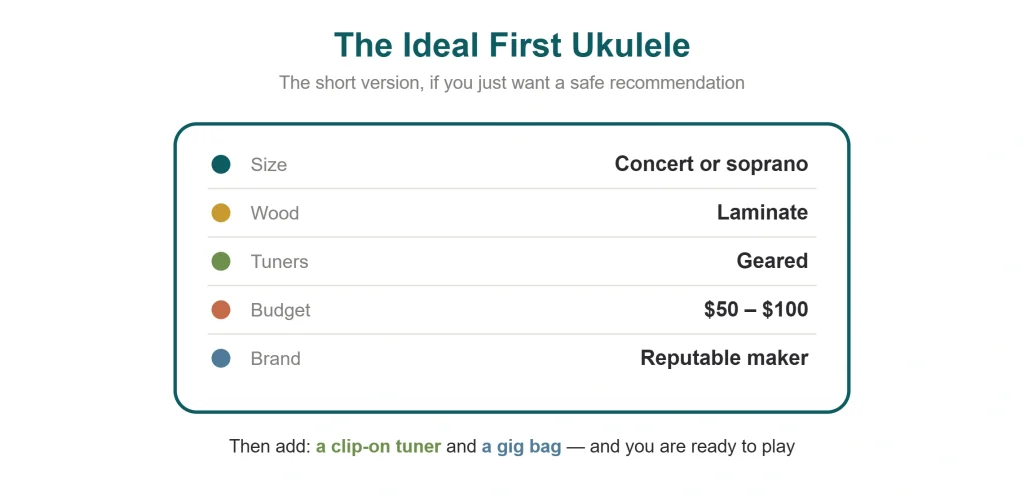
If you want the short version: for most beginners, a concert or soprano ukulele, made of laminate wood, with geared tuners, in the $50 to $100 range, from a reputable brand is the ideal first instrument. Add a clip-on tuner and a gig bag, and you have everything you need to start.
Ready to Start Playing
Choosing your first ukulele does not have to be complicated. Pick a comfortable size, spend enough to get an instrument that stays in tune, favor laminate wood and geared tuners for your first one, and buy from a reputable brand. Get those basics right and you will have an instrument that makes learning a joy rather than a struggle.
Once your new ukulele arrives, our complete beginner’s guide to playing the ukulele will take you from your very first chord to strumming a full song.
Frequently Asked Questions
What size ukulele is best for beginners?
A concert or soprano ukulele is best for most beginners. The soprano gives the classic bright ukulele sound in a compact size, while the concert offers a little more finger room and a fuller tone. Both use standard G-C-E-A tuning, so chords transfer between them.
How much should I spend on my first ukulele?
Around $50 to $100 is the sweet spot for a first ukulele. That range buys a reliable instrument that holds its tuning and sounds pleasant. Avoid the very cheapest toy ukuleles under about $30, since they are hard to keep in tune and make learning frustrating.
Is laminate or solid wood better for a beginner?
A laminate ukulele is the practical choice for beginners because it is affordable, durable, and less affected by humidity. Solid wood sounds richer and can improve with age but costs more and needs more care. You can start on laminate and upgrade later if you fall in love with playing.
Do I need any accessories with my first ukulele?
The two most useful accessories are a clip-on tuner and a padded gig bag. A strap and spare strings are nice extras. Many sellers bundle these with the ukulele, which is often better value than buying them separately.
Should I buy my ukulele online or in a store?
Both work well. A local music shop lets you hold and hear the instrument first and often includes setup, while buying online offers more choice and better prices. If you buy online, choose well-reviewed models from established brands and sellers with easy returns.
2 thoughts on “How to Choose Your First Ukulele: A Beginner’s Buyer’s Guide”