
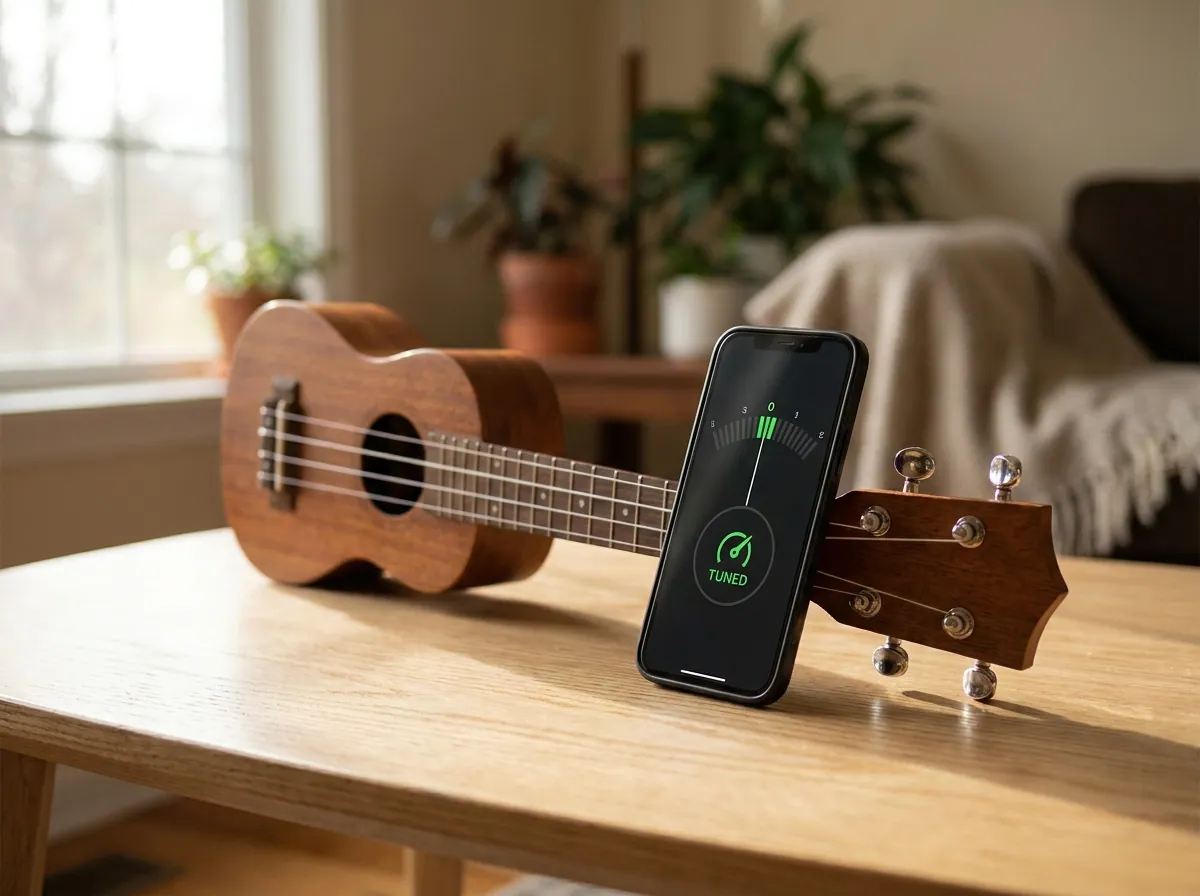
A ukulele that is even a hair out of tune sounds wrong no matter how well you play, so tuning is the first skill worth mastering. It is quick and easy once you understand how it works. This guide explains the standard G-C-E-A tuning, shows you several ways to tune, and helps you fix the common problems that trip up beginners.
If you are brand new to the instrument, you may also want our full beginner’s guide to playing the ukulele, which covers holding, chords, and strumming after you have tuned up.
What Is Standard Ukulele Tuning?
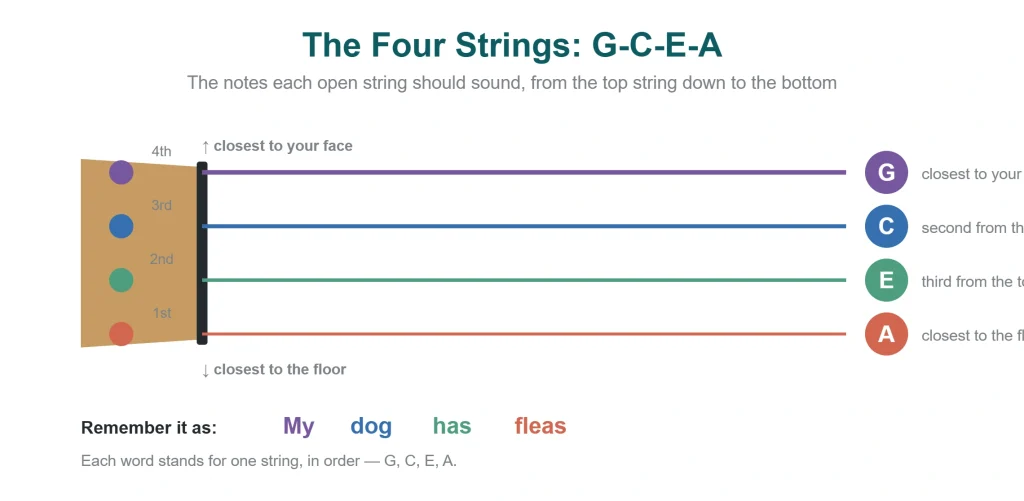
The standard tuning for the soprano, concert, and tenor ukulele is G-C-E-A. These are the notes each of the four strings should sound when played open, meaning without pressing down any fret.
Reading from the top string (the one closest to your face as you hold the instrument) down to the bottom string (closest to the floor), the notes are G, C, E, and A.
Players number the strings from the bottom up. The A string is the 1st string, E is the 2nd, C is the 3rd, and the top G is the 4th string. A classic way to remember the four notes is the sung phrase “My dog has fleas,” where each word matches one string in order: G-C-E-A.
| String number | Note | Position |
|---|---|---|
| 4th (top) | G | Closest to your face |
| 3rd | C | Second from the top |
| 2nd | E | Third from the top |
| 1st (bottom) | A | Closest to the floor |
Re-Entrant Tuning: Why the Top String Is Higher
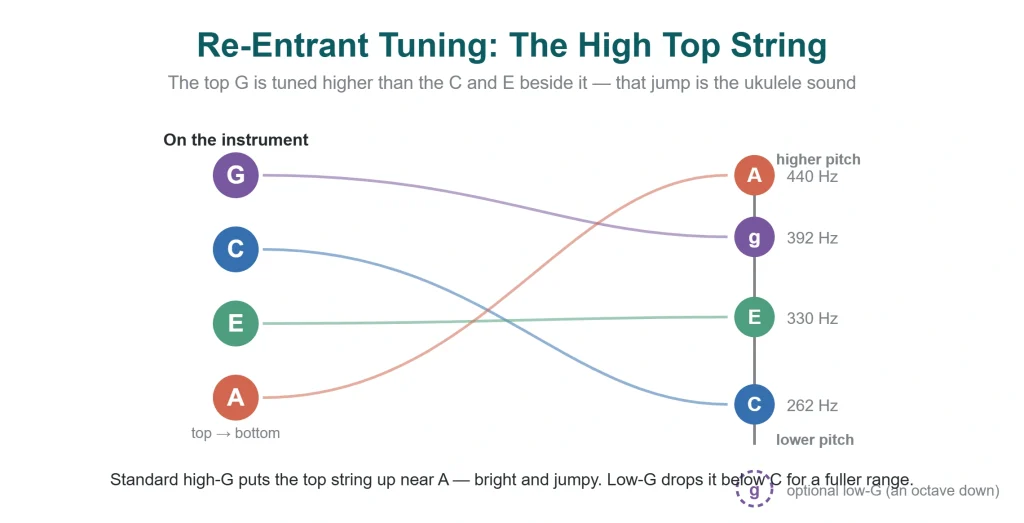
The top G string sits higher in pitch than the C and E strings next to it, not lower as most beginners expect. In musical terms the notes are g4, C4, E4, and A4, where C4 is middle C on a piano and the g sits above it.
This is called re-entrant tuning, and that high, jumpy top string gives the ukulele much of its bright, cheerful sound.
Some players prefer low-G tuning, which swaps in a thicker string so the top G drops an octave. This gives a fuller, deeper range that some fingerpickers favor. It comes down to taste, and both use the same G-C-E-A note names. If you are just starting out, stick with the standard high-G re-entrant tuning your instrument came with.
A Note on Baritone Ukuleles
The largest common size, the baritone, is the exception. Players tune it to D-G-B-E, the same as the top four strings of a guitar, which gives it a deeper tone. If you have a soprano, concert, or tenor, use G-C-E-A. You can read more about the differences in our guide to the types of ukuleles.
How to Tune with a Clip-On Tuner or App
The easiest and most reliable method for beginners is a clip-on tuner that attaches to the headstock, or a free tuning app on your phone. A clip-on tuner senses the instrument’s vibration, so it works even in a noisy room.
- Clip the tuner to the headstock and turn it on, or open your tuning app.
- Pluck one string at a time and let it ring.
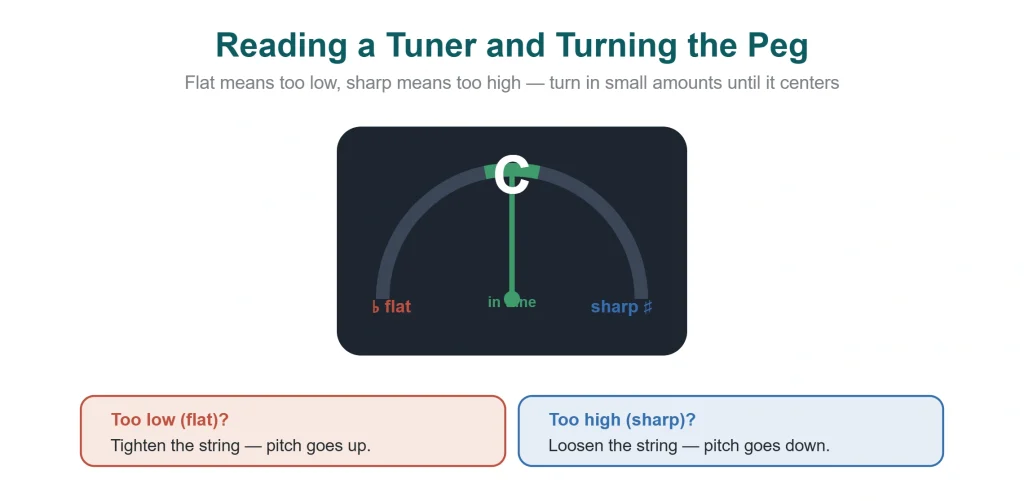
- Watch the display. It will show the note it hears and whether that note is too low (flat) or too high (sharp).
- Turn that string’s tuning peg in small amounts until the display shows the correct letter and reads in tune, often with a needle centered or the screen turning green.
- Repeat for all four strings so they read G, C, E, and A.
Turn the pegs in small movements. If a string sits far below pitch, bring it up bit by bit rather than yanking it, and take care not to overshoot the target note, which stresses the string.
How to Tune to a Piano or Reference Notes
If you have a piano, keyboard, or an app that plays reference tones, you can tune by ear against the correct pitches. On a piano, the C string matches middle C. From there, find E and A just above middle C, and the g above that for the re-entrant top string.
Play the reference note, pluck the matching string, and adjust the peg until the two sound identical with no wobble between them.
For reference, concert pitch sets the A string at 440 Hz. The other standard pitches fall at roughly 261.6 Hz for middle C, 329.6 Hz for E, and 392 Hz for the high g. You do not need to memorize these numbers, but they are useful if you use an online tone generator to tune against.
How to Tune the Ukulele to Itself (Relative Tuning)
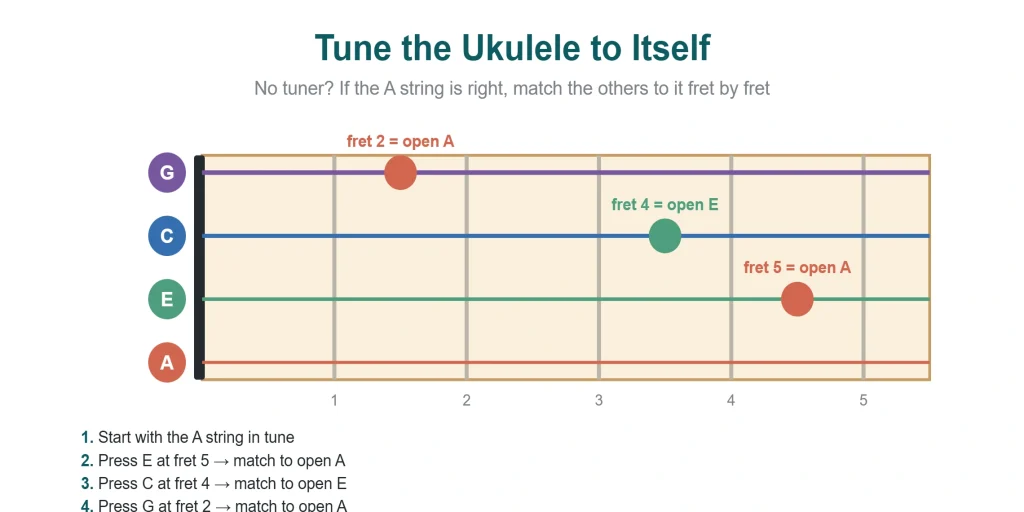
If you have no tuner handy but your A string is already at the right pitch (or close enough for playing alone), you can tune the other strings relative to it. This method makes the instrument sound in tune with itself, which is what matters when you are playing on your own.
- Start with the A string (1st string) tuned correctly from any reference you trust.
- Press the E string (2nd) at the 5th fret and pluck it. It should sound the same as the open A string. Adjust the E string until they match.
- Press the C string (3rd) at the 4th fret and pluck it. It should match the open E string. Adjust the C string to match.
- Press the top G string (4th) at the 2nd fret and pluck it. It should match the open A string. Adjust the G string to match.
Relative tuning is a great backup skill, but whenever possible use a tuner or reference so your instrument is also in tune with the rest of the world, which matters the moment you play along with a recording or another musician.
Why Won’t My Ukulele Stay in Tune?
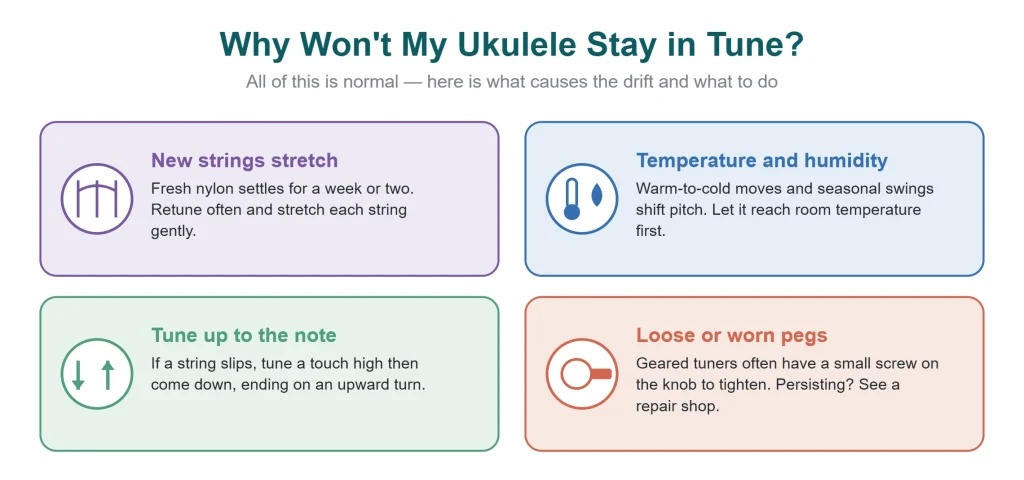
New players get frustrated when their ukulele drifts out of tune fast. This is normal, and the causes are easy to explain.
- New strings stretch. A brand-new set of strings, or a freshly restrung instrument, keeps going flat for the first week or two as the nylon settles. Retune whenever you need to; it will soon hold steady. You can speed this up by stretching each string with your fingers after tuning.
- Temperature and humidity changes. Moving between a warm room and a cold one, or seasonal humidity swings, can shift the tuning. Let the instrument settle to room temperature before tuning.
- Tuning down to pitch. If you tune a string up to its note and it slips, try tuning a touch above and then coming down to the note. Ending on an upward turn can also help the string seat.
- Loose or worn pegs. If a peg turns too freely and will not hold, you can often adjust geared tuners with a small screw at the end of the knob. If the problem persists, take the tuners to a repair shop.
Which Way Do I Turn the Tuning Peg?
Tightening a string raises its pitch (sharper), and loosening it lowers the pitch (flatter). Pegs can be mounted in different directions, so build the habit of plucking the string over and over while you turn the peg and watch which way the pitch moves on your tuner.
If it climbs toward the note, keep going; if it moves away, turn the other way. Make small adjustments so you never over-tighten a string, which can snap it.
Ready to Play
Once your ukulele is tuned to G-C-E-A, you are ready to make music. Keep a clip-on tuner or app close by, check your tuning at the start of every session, and be patient with new strings while they settle.
Next, put that fresh tuning to use with our complete beginner’s guide to playing the ukulele, which walks you through your first chords, strumming, and your first song.
Frequently Asked Questions
What are the four ukulele string notes?
In standard tuning the four strings are G, C, E, and A, reading from the top string closest to your face down to the bottom string. The top G sits higher than the C and E next to it, which players call re-entrant tuning.
Is a ukulele tuned the same as a guitar?
No. A standard soprano, concert, or tenor ukulele uses G-C-E-A, while a guitar has six strings tuned E-A-D-G-B-E. The baritone ukulele uses D-G-B-E, matching the top four strings of a guitar, which is why guitar players find it familiar.
How often should I tune my ukulele?
Check the tuning every time you pick up the instrument. Ukuleles drift out of tune with new strings or changes in temperature, so a quick check before each practice session keeps you sounding your best.
Can I tune a ukulele without a tuner?
Yes. If your A string is at the correct pitch, you can tune the others relative to it with the fret method: the E string at the 5th fret matches the open A, the C string at the 4th fret matches the open E, and the G string at the 2nd fret matches the open A. Still, reach for a tuner or app when you can, so you stay in tune with other instruments and recordings.
What is the difference between high-G and low-G tuning?
Both use the notes G-C-E-A. High-G, or re-entrant tuning, is the standard and gives the bright, classic ukulele sound with the top string tuned high. Low-G uses a thicker string tuned an octave lower for a fuller range, favored by some fingerstyle players. Beginners should start with the standard high-G setup.
2 thoughts on “How to Tune a Ukulele: The Standard G-C-E-A Tuning Explained”